0:00 Marcus Younis I remember just swinging my leg with my left foot and I made contact with the ball and then I ran off, took my jersey, and then all the boys came in together. So that was that was special. I'd never forget that.
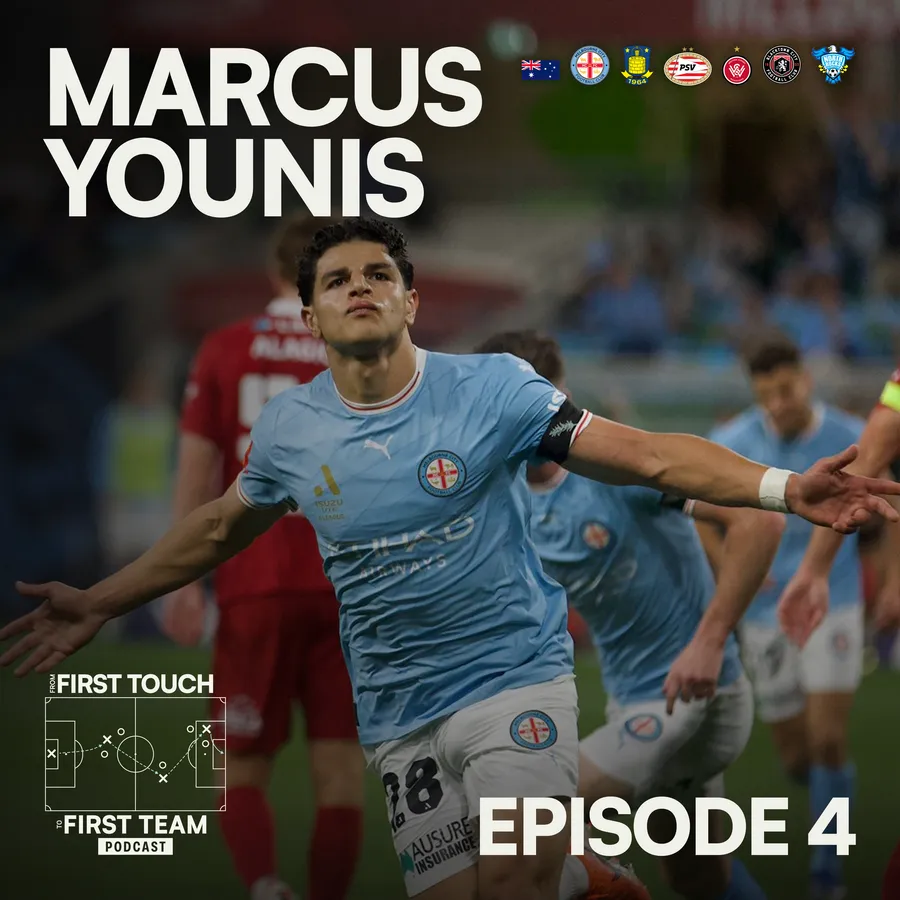
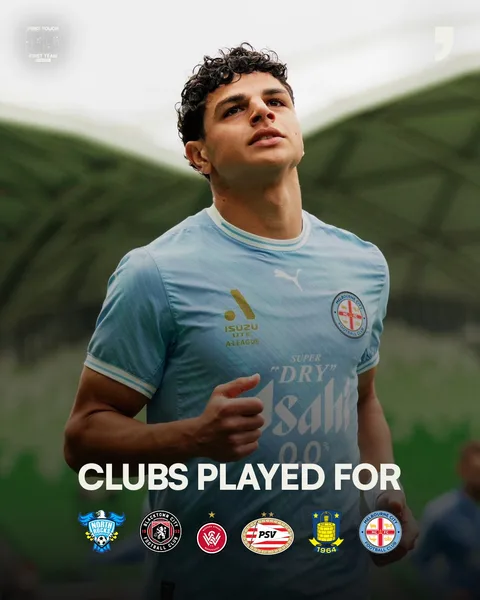
0:09 Jan Welcome to the episode. This week I sat down with Marcus Younis to discuss all things around the World Cup, how he sees the chances for the Socceros. We especially spoke about his time in the Western Sydney Wanderers Academy, making his pro debut in the A-League, then deciding to sign with PSV Eindhoven, one of the biggest youth development clubs in Europe, getting another professional deal at Brondby in Denmark, then deciding to come back to Melbourne City on loan. Where he kinda had a breakout season to really showcase how high his talent is. And we discuss how important it is for a player to always have a support network around them and feeling comfortable so he can really shine with his football. Before we jump into this episode, subscribe to all our channels. As said last week, feel free to send us a text, leave a comment. of questions you have, of advice you maybe need, of maybe guests you would want to hear from. We are very open and we really appreciate your support. Thanks and enjoy the episode. Marcus, welcome to From First Touch to First Team. How you been?
1:10 Marcus Younis good, thank you. Thanks, Jani for having me. No, it's been good. I'm on break at the moment, but I'm enjoying my time.
1:15 Jan So I find you in Sydney at the moment, that's where home is.
1:18 Marcus Younis Yeah, I'm I'm at home. I'm with my family. it's been good. I've been down to the beaches a little bit just just to walk around and I've been to the city as much as I can, so I'm just n enjoying the city now.
1:30 Jan I mean it's I assume it's probably gonna be a a short stint for you. you just came back from Melbourne, but before we dive into the full conversation, I know in Australia there will be a lot of people that that know the name Marcus Younis that will know you, but maybe for someone that's gonna listen from overseas that maybe doesn't know you, who is Marcus Younis?
1:47 Marcus Younis Marcus Younis I'm what 21 soon. I'm a I'm a winger. yeah, if I had to describe my my playstyle, I'd I'd say very direct. 1v1, in behind, lots of shooting, lots of crossing. I'm a family person as well. I love my family. I've got a big family, very, very lucky. So I was raised obviously by my parents, but also been around a lot of cousins, a lot of friends, a lot of family. So I had a really, really good childhood and that means a lot, like to me and and yeah, just very lucky in a sense, as well being around a football family with my dad. you know, being
2:19 Jan I mean you you can you can call yourself a professional footballer, right? You've achieved
2:22 Marcus Younis Yeah.
2:23 Jan the goal that many, many players and especially young players out there have. and that's I guess that's what we wanna yeah, get into detail today in this episode, talk a little bit about your journey. so with every guest I like to to start right at the beginning, first touch. How did you get into football? What can you remember? What is the first starting point? Give us a picture, how how did you start?
2:47 Marcus Younis well I've always played football, I think, since I couldn't remember. I'm in a family of footballers. Like I said, my uncle played, my dad played, my brother plays, my sister plays. So we're all sort of born into it. but yeah, I I played the first minute I could walk. But it's funny, my dad used to tell me I never used to like it. growing up. You know, my first couple of years when I when I started to play three, four, five years old, I never really enjoyed it. and then he told me something just clicked. So I don't know what happened, but that happened and then I was I've obviously enjoyed it since then. I started, just at my local club and then moved into the NPL space and then into the A League space later on. So yeah, I had a had a pretty weird sort of childhood with football, never really liked it and then ended up liking it a lot. that's what my parents tell me.
3:30 Jan Yeah. So when you when you were young, when you started to play, obviously influenced by your dad, I know your sister's playing as well. So I assume there was a lot like kicking around in the family. How was that with friends, kids in the neighborhood? Was that already a thing for you or did they come later?
3:46 Marcus Younis Yeah, definitely. I think you know, as soon as like I said, as soon as I could kick a ball, I was doing it all day, especially when I started to enjoy it with you know, with my older brother, my dad. we had a park across my grandmother's house. that all our all us cousins used to go to, so we're always playing there. from the very early days we all loved it together and we all played together and it was not really friends because it was more my family because of how many cousins I had. So all my friends were my cousins.
4:11 Marcus Younis Even at school, so Yeah, probably.
4:11 Jan Could you already could could you guys put a starting eleven together? Yeah.
4:16 Marcus Younis No, we used to play three, three V three, four V four in the back, so yeah, just the best memories.
4:21 Jan Yeah, that's great. So would you say that's kinda already started to shape a little bit how you became as a footballer? Because you were able to we as I I'm a coach, so I always said to be so young players, hey, ideally when you're young, like nine, ten, eleven, twelve years old, you should play as much two V two, three V three as possible because that's how you enjoy the game, but that's how how you learn and find your own kind of playing style. Would you say that applied to you?
4:44 Marcus Younis Yeah, I would say so. I think having an older brother it was always a bit more difficult. my brother always, you know, bullied me until he couldn't anymore. But
4:51 Jan Yeah.
4:52 Marcus Younis but no, growing up he he was a big bully, so I got to learn how to become, you know, a bit stronger and learn how to become better actually was was an advantage for me. So yeah, I think that sort of street style and and and having fun but also making it super, super competitive. I think that still within me today like a very competitive person. So yeah, I think the way that I got brought up playing in the backyard was very, very influential in how I am today.
5:19 Jan Yeah, I love that because when I think back, I grew up in Frankfurt in Germany, and we used to have like the cages over there. And it was
5:23 Marcus Younis Yeah, yeah, yeah.
5:25 Jan always you would go there with some friends, then there would be guys that would be like three, four years older and would always you have to win the game if you want to stay on the pitch and that's like you said, the competitiveness would be insane, but you would also sometimes go home with like bruised legs, like in pain. But they just kicked you.
5:37 Marcus Younis Yeah, all the time. Me and my brother fought yeah, me and my brother fought all the time. So many stories, but it's good.
5:44 Jan Yeah. But like you said, it set the base of yeah, kind of what the player you are and now. So then take us to the next phase. You said you you started to move into NPL What was grassroots football like? How did the transition go?
5:55 Marcus Younis Yeah. So I went from club to Blacktown City with under tens and under elevens. it was it was a cool experience, and yeah, I remember my days pretty pretty clearly there. I loved it. there's still some videos that I also watch back on about my time there and watching some goals and you know, trying different positions, but that's I think that's where I really, really sort of understood where I wanted to play and how I wanted to play and the position I think from then on I just always felt like I wanted to be a winger. and yeah, I think being able to do that at a young age and still play the same position has helped so much because I just I I have that little that instinct when you're about to put in a cross, you don't have to look, you just sort of know where everything is or whenever
6:35 Jan Yeah.
6:36 Marcus Younis you shoot, you know where the goal is straight away or the players around you. So That obviously obviously helped learning from that age. And then from there, moving into the Western Sydney Wanderers Academy when I was twelve, turning thirteen. So I started playing under thirteens when I was twelve. That was cool, man. Like even now I I'm I'm still close with fifty, sixty percent of the boys in that team. so yeah, it was just it was a cool experience moving from NPL to an A League club, Being there for nine years of ups and downs at Western City Wanderers, but forever grateful for for what they gave me, the coaches, the all that, you know, t it was it was the base of my development, I think.
7:13 Jan Yeah, you probably must have done something very right, at Blacktown that the Wanderer Scouts were like, we like this kid. And in the first episode I was speaking to Will Kennedy, who you might know who kinda went for like similar he was in an NPL club, then got scouted by Sydney FC and went into under thirteens and ended up making his pro debut for Sydney FC as well. So rivalry club, but kinda similar story in terms of you both managed to get into the the A-League Academy early go all the way, which is obviously amazing. what would you say throughout the years, under thirteens till sixteens, what was the most important part for you in terms of everyday life, training? How would you approach it? How would you say looking back now, what was the best part that you did for your development?
7:56 Marcus Younis Well, I was twelve when I was playing thirteen and and then I played thirteens again. So I had two years of the thirteens and those two years like flew by. I was doing really well. I remember scoring like a heap of goals from the wing. and then yeah, I'm moved into the under fourteens season and I remember being fourteen and sometimes I would play under fifteens and I remember one fifteens game I had a like a slight at ACL tear, so it was it was like that was a little six month in six month injury that I was out for. Came back from that and then I had a knee condition which took me out for the whole year as well.
8:28 Jan wow, yeah.
8:29 Marcus Younis Came back from that, broke my collarbone. So I think from the age of fourteen to sixteen I had no football. So those were the years where I was off the pitch but learning so much. and credit to my my parents and my support network and the club as well for keeping me because Yeah, I survived that being being a kid, you know, you're either gonna make it or break it in that in that position. I think I learned so much and I would never have changed what happened because, became a better person, a a more resilient player as well. I think that's super important being resilient. So there was development there when I was thirteen and started fourteens, but then I think the large amount of time I missed was so beneficial because, I mentally I just became more resilient and strong.
9:11 Jan And then how did you manage to catch up like all of that lost time with the ball?
9:15 Marcus Younis Funny. It was funny, really funny. I was sixteen playing under eighteens, which which is good, but back then when you're when you're young, you know, you're sixteen, you start to play reserve team and then, you know, you start training with the first team a little bit. So I remember being sixteen and all the boys that I used to play with young, they were all twenties and First and reserve grade and sometimes training with A League. So I remember being sixteen playing eighteens and then in one year I went from I jumped from the eighteens to the twenties. Then I played the 20s, won the grand final, then made my debut for the NPL And then during the World Cup break, because I've I continued to do well, I got to train with the A-League during the World Cup break in December 2022, I think. And then, couple injuries came and then I made my debut. So within a year, I went from under 18s to to A-League debut. So yeah, it just completely flew by that sort of 12 months. and yeah, it was I just rode the wave, I guess. I just I really enjoyed it, Gave me an opportunity to catch back up.
10:09 Jan I mean, a lot of people might think now wow, he had nearly what one and a half, two years of football and what from a coaching perspective you would say these are the most crucial years for the development of a young player. But you found a way to come back from that, as you said, like more resilient, mentally way stronger. But I might be questioning right now, and like I didn't know that part of your story, how did you even manage to then be just technically as good as you are now because you lost so much time that other players were spending training four or five times a week, maybe additional time with the ball. how did you manage that?
10:42 Marcus Younis Well, I think during the time it was actually COVID, so we're all in lockdown, which was pretty fortunate. That obviously helped. And when I could start touching a football again, I did a lot, a lot of work. especially on my on my left foot and and some technical work because technically I wasn't the greatest growing up. I was just very fast, very strong, very powerful. So that was just an aspect of my game I had to to work on. So yeah, as soon as I could start touching a ball in rehab, it was straight to the technical bits. and also having that support network, my dad obviously being a footballer, being able to train with my younger sibling and older sibling and always being in that environment even during lockdown. I was pretty fortunate of that. And my dad also he has his gym as well, so being able to be in and out of the gym during that time gave me that sort of advantage. So yeah, there was just a lot of time spent, you know, sort of on the sidelines, but I was still working, like I wasn't
11:32 Jan Yeah.
11:33 Marcus Younis wasn't just resting, so it was it was a slow and steady process, but, I wouldn't change it for the better.
11:38 Jan Yeah, no, great. And I think in in the football world there's always these conversations players that are at fourteen, fifteen, sixteen, that are physically strong. A lot of coaches try to always give that player that feedback of Hey, okay, I know you're getting away with it right now, but when you go into senior football, we need to work on certain things. Would you say when you were younger you took that on board? Or did you I was like, no, I just rely on my speed, my strength and I
12:01 Marcus Younis Yeah.
12:02 Jan know I can get past players?
12:03 Marcus Younis Yeah, I would say so. I think that was something I always had. I always had speed. I was always, you know, faster than who whoever was marking me, I think, growing up. But I also had that ability to have the final product. I think that's what a lot of fast players they sort of struggle to do And I also knew how to use my speed and strength. You can have speed and strength, but you know, you might not know how to use it. I I learned how to use it and I think, you know, I obviously had to catch up because technically I wasn't where I had to be. but even now I'm still still working. I knew what my strengths were and I of course worked on my weaknesses, but I made my strengths even stronger. And those strengths made me who I am. They made me special in terms of, if a coach needs a player that runs in behind, I I I feel like I can be that person because I've perfected that, I've got the pace, let me learn how to use it properly, you know what mean? So I think I think perfect
12:54 Jan Yeah. Yeah. So
12:56 Marcus Younis perfecting your strengths was was the biggest thing.
12:58 Jan And then would you say that's probably the last question around that that age and time, there would be many footballers out there that that go through this rough patch that you had with injury after injury and sideline that wasn't there a moment where you're like, Okay, maybe football is not gonna happen for me?
13:12 Marcus Younis Maybe, I was young, so I was pretty naive to it all. I didn't really think about it much. I just listened to whatever my dad said. And my
13:17 Jan Ha ha.
13:18 Marcus Younis dad my dad took my whole rehab and all of that. So credit to him. And my mum as well. You know, my mum was very, very supportive in in that moment. So I think they just made me forget about all the negative things that could come out of it and were very, very positive. So
13:32 Jan Yeah, and then then fast forward you already introduced it a little bit. you were riding the wave of progressing quite fast through the age groups, being a young player, already playing senior football, starting to train with the A League. Was there ever a moment where you're like, okay, football could actually now become a professional career? Can you remember a certain moment?
13:48 Marcus Younis Yeah, I think Yeah, I remember my first session. there like pretty clearly it it was myself and Riley Hollingdale. He plays at Sutherland Sharks now. So it was our first session together. our first time training A-League and I remember it so clearly and then I remember talking to some of the older boys and you know, you just think like far out, I'm here now. I remember then getting the photos after training 'cause the photographer was there and then You know, you get all excited as a kid, now you now you feel like you're a professional. but I always knew that that wasn't it, you know. I always want more and I always set standards and goals for myself to just keep going and not not be complacent and comfortable.
14:25 Jan Who was the who was the head coach back then? Was that Wanderers senior team quite strong?
14:29 Marcus Younis yeah, it was actually. We had a that had a really, really good team At the time it was Rudan so yeah, credit to Rudan He gave me my opportunity, gave me yeah, training sessions with the first team, that my debut, and then a whole heap of appearances the year after. So I thank him very much. and that coaching staff, and yeah, there were some older boys there. I think at the time, Morgan Schneiderlin went in came into the into that January transfer window. We had Marcello, the centre back, you know Hendrix who's now in Germany, so there's just a bunch of really, really high quality players So yeah, you got to see that first hand. Being a young kid, it's like what the hell, you know.
15:03 Jan Yeah, yeah, amazing. And then when was that moment where you're like, Okay, pro contract is happening? take us back to that moment. What did that feel like? How did it happen?
15:12 Marcus Younis Yeah, so I had preseason sort of training, like during the World Cup, made my debut, then started the NPL season. And then I then signed my contract when I was eighteen, my first contract. It was a scholarship and yeah, there was there was a couple of clubs, but I think I just wanted to be, my grassroots club and and stay home and sort of A bit not less pressure but it's more like comfortable because of such a vulnerable position to be in, you know, your first proper year in the A-League
15:40 Jan Yeah.
15:41 Marcus Younis training week in, week out. So it was super important that I made the right decision and I did, I made that decision with my family and I I wouldn't change it. I got I got the opportunities that year, came off the bench, scored my like my first goal, first assist, all that sort of stuff. So yeah, it was pretty pretty special that year and receiving my first contract was pretty cool.
15:58 Jan Yes. well done and then and in the end, good decision, right?
16:02 Marcus Younis Yeah, I guess I guess.
16:03 Jan Yeah. Bi before we go into the next phase, maybe to close that that youth kinda side, is there anything that you looking back now, besides the injury part that you would do differently or that you would advise young players to maybe spend more time on?
16:17 Marcus Younis Hmm. I would say because it's such a like vulnerable moment for yourself and it's so new, such a fresh environment, just being grateful that you're there as a as a young player. I think if you're a young player being with first team, it's obviously normal to show nerves and and shy away from being who you are. But I think it's super important that you try and be the best version of yourself, be who you are. You know, don't be nervous, show confidence. worry less, I think. That's what I did a lot. I worried too much and was too worried about what coaches other players think. I think it's super important you just take your own lane and every player and every coach has their own personal issues. So just understand that everyone has their own things they have to deal with and they don't really wanna see you walking around like a victim or you're upset
17:00 Jan Yes.
17:01 Marcus Younis when you're not being chosen or being on the side at training. So young players they understand that time heals. It it's it's the first part of your career, it'll it'll take time, plenty of ups and downs, but just just just be happy, I think. Be grateful.
17:14 Jan Yeah. that's that's a very good point. And I find it a lot these days that I I deal with a lot of players that are in that age group now that you kind of started to break into first team now as well. And I mean it's good because they're very confident in themselves and they say, Yes, I know I can play first grade, but at the same time, like, hey, there's a lot of other players that are twenty five, twenty six, twenty seven there also at their peak of their career. They're the ones that went through this phase. You gotta be patient. You have so many more years to go. And even for you, you're still twenty years old. You You still have a long, hopefully a long career ahead of you. So it's that mindset of okay, I'm there now. Obviously, I want more, but also knowing that you have to be yeah, patient and waiting for your chances to go. so let's go into that that next phase. what what impressed me probably the most, and that's something I want to go in this conversation a little bit more to detail. You were already in the A-League squad, you signed a contract, you were a professional player, you were training with the A League squad. Then you decide to kind of go I don't want to say the step back, but you got the opportunity to sign with PSV and then you decided to go there, but it also also meant you would go more into not a youth space, but still back into a development space where there's more younger players, where it's not full professional in terms of you playing in bigger crowds and big stadiums. What was the main reason for you that you said that's something I really need to do and I want to do?
18:28 Marcus Younis Well I think your first move to Europe is so like so important. I think, you have to be sure, you have to be right and comfortable. so yeah, I had the opportunity to go on a year loan to PSV like to such a historic club with such little appearances in the A League. And it was just a decision I just couldn't turn down. and I wouldn't say it was a step back. I think I would say it was more just step in my development because like I said, I think it was the perfect transition from Australia to Europe for a young player. I got in an environment where I knew I was going to play week in, week out, had the opportunity to train with first team every now and then. and also I learned what I needed to work on because I told you I wasn't, near the technical level I needed to be at to become a professional being at PSV in such a technical environment, you're being throwing the deep end. So but also it worked in my favor, I learned how to become a more technical player, but I also learned how to, use my strengths even more so. I used to dribble, do step overs, go one on one in Australia, then I go to PSV you do the you see the centre backs, they do that. Like every player on the ball is unbelievable. So I think what I had that was different was off the ball, I I did a lot more than what what they did there and I was a lot more direct and in behind and very sure with what I wanted to do in terms of finishing my actions, scoring, assisting, crossing. So I think that was important. I think it was an actually really, really good transition in my career and It also gave me the opportunity at an easier level to expose myself because
19:59 Jan Yeah.
20:00 Marcus Younis although I was in the second team, I was still playing first grade but second league in in the Dutch league, which was still tough. You know, you play away at at Den Haag, which is you know, they got twenty thousand fans screaming and throwing beer at you. So it's crazy, you know, also th that was just such a cool opportunity for me to experience and like thank you to the the people that work for me as well that They're fantastic, but yeah, it was just an unreal stepping stone for me. And even though I didn't end up staying, I moved on to a first team European environment. It was such a massive learning curve and and sort of growth in my career.
20:36 Jan And everyone in Europe knows that PSV is a club that develops a lot of young players that bring a lot of young players that maybe don't make their first great debut at PSV in the first team, but they go somewhere else because their their technical and tactical foundation is so high. so I think that's an amazing next step, as you said. What would you say what was the maybe the biggest challenge or the biggest adjustment you had to make from playing the Australian way of playing football to then playing the Dutch way? Of football.
21:02 Marcus Younis I I remember first going and obviously you're a foreigner so it's not easy. and you 'cause it's not a first team environment where everyone's helping you. It's a second team where everyone's fighting to make the first team.
21:13 Jan Yes.
21:13 Marcus Younis So everyone hates you. First couple of months, no friends, nothing. No, they
21:17 Jan So everyone just spoke to you in Dutch or did they actually speak to you in English?
21:20 Marcus Younis speak Dutch to my face and
21:22 Jan ha.
21:22 Marcus Younis I started to pick up what they were saying and it was no good. But
21:26 Jan Yeah.
21:26 Marcus Younis You know, it was a tough environment. I got thrown in that deep end, but if you only benefit from it, and the first the first few sessions we were doing six V two in in small boxes for like an hour. And I can tell you right now, at the start I was like in the whole time. Yeah, I had a Season ticket
21:42 Jan You had a season ticket?
21:44 Marcus Younis you just sort of pick it up and then you sort of learn and then by the end of by the end of the season, you know, there were sessions where I wouldn't even go in or, you know, get in once or twice. So those were just Massive learning sort of curves for me and being thrown into that deep end is the fastest way you learn. So it was good.
21:59 Jan Yeah, amazing. And honestly, big respect because I feel like sometimes and that's me maybe being a bit harsh, there's players here in the A League that are still young, that make the A League, but that don't strive for more.
22:11 Marcus Younis Yeah.
22:12 Jan And you could have done the same. You could have said, I'm playing at Wanderers, I'm gonna just stay here, I'm gonna play here the next four or five years, then maybe I get another contract at another A League club for a little bit more money and I'm just gonna play A League. Right, but you actively said, nah, there's an opportunity for me. I want to go to Europe, I have high aspirations. And I think that speaks for the the character that you have and and what you probably as long term goals still still have to go. So then talk us through that next part, you then sign a another contract, a new contract with Brondby you go there. you have to adjust again at a in a very short period of time, at a young age, to then another language, another country.
22:48 Marcus Younis Yeah.
22:49 Jan How was that?
22:49 Marcus Younis Well, when I first got there, it was honestly it was unreal. It took a while to actually happen. So I was back home, had ants in my pants waiting to go again. but
22:58 Jan Yes.
22:58 Marcus Younis when I ended up going to Denmark, it was it was un it was unreal. The first two, three weeks I was just like s I was so grateful I was there. You know, the coach liked me the players you know, I felt like at home straight away. I had to wait a couple of weeks for my my visa to come in so I was just sort of training on the side. And then when I got to train, I I started off really well, played like a international break friendly against Nordsjaelland where I did really well in it as well. And then two days later I get told I'm gonna start against Copenhagen. So, the first three weeks was just unreal. next day a coach gets sacked, a new coach comes in, and then I'm on the side for for two, three months. and then it got to a point where He told me I I had to go because he was bringing in his own players. So it was just it went from this to this. So it was a big mess, sort of. but
23:44 Jan How did you deal with that mentally? Because obviously that's that's a big part of football, right?
23:48 Marcus Younis So tough. I think people realise, you know, you're twenty years old, living in a foreign country, you're on different time zones to your parents, you know, and family, so you can't even talk to them. The best time to talk to them is at training. And then when you're at training, when
23:59 Jan Yeah.
24:00 Marcus Younis you finish training, they go to sleep. So there's that, and then there's the weather as well being an Aussie. And then it's ~
24:04 Jan Yeah.
24:05 Marcus Younis you're training in zero degrees with snow and rain and wind. then you finish training upset 'cause you didn't get to train with the full squad and then you're you're by yourself at home and then you fight against yourself and your own thoughts because that's who you're only with, you know? It's you and your own mind. So that was super challenging Environment for me. I I wouldn't change it because, you know, things happen the way they did and very grateful for for City and and whatever whatever happened there. But I think that was just a massive learning curve and it was it was very tough, I can't lie. It was very tough.
24:36 Jan Yeah. And that's the harsh reality of professional football, right? That things can, like you said, change from one day to the other. the team is not performing, coaches get changed, and out of nowhere there's a new coach coming in and it either goes in your favor or it can get fully against you. And yeah, you had to experience how it can happen that it goes against you. a question from from my side is there did you then find again a difference between playing at and training at Young PSV than being at a first team, professional team in Denmark.
25:04 Marcus Younis Yeah, saw a little bit of a difference. I think even at PSV, the first team training to the reserve team training, you see a big difference in terms of the players I think being a lot more calm and a lot more sort of not reserved in a way, but knowing when they need to go hard and then knowing when to they need to go soft and relax. I think that's something I still need to need to fix, you know, at training for me. It's always like fast, fast, fast, fast, fast, work, work work, where. around a European first team it's very much knowing when to go hard, knowing when to relax, taking care of your body, in that sort of way. So then you see that and then it's a lot more tactical as well, being in the first team, even experiencing that in Australia, you When I went from A League to then PSV the training was so much better because there was just n there was not many tactics, it was more just possession based training, game based training, and then we do one day of rarely any tactical before the game on the weekend. So yeah, there was just that jump there and it's it's hard as a young player, you know, you do tactical most session and then you don't even play on the weekend. So you just feel like you're wasting your time. So you gotta make
26:02 Jan yeah.
26:02 Marcus Younis sure you do your extras, you're in the gym doing extra because, your hamstrings aren't being worked on the weekend, so you gotta do more in the gym. But
26:09 Jan Yeah.
26:09 Marcus Younis there's just stuff so many things you have to adjust to. But it's good. Wouldn't change it. It's good.
26:14 Jan Yeah. And then you decide to come back on loan to Australia, not Sydney this time, Melbourne. and I think everyone that watches and follows football here knows that you being back on home soil, being more comfortable, having people around you, knowing you're in the same time zone as your parents and family, you can talk to them. first, how did that feel? And then second, what would you say was the unlock feeling that you performed the way you did in the in the second half of the season after the transfer window.
26:40 Marcus Younis It was really super fast. I was actually in Saudi with the under twenty three's Asian Cup and I I wasn't playing there because I wasn't playing at Brondby So it was I had no game time under my belt and so I wasn't really playing there either. On the phone with my dad and just talking about how I need to play as a young player, you need you need game time, you need to play. Otherwise you just don't develop. It's the best way to develop. And you know, within a day and a half I was on a flight. After we got knocked out, I was on a flight. To Copenhagen, packed up my whole apartment in like a day. Next day just to Melbourne. Right. So it was it was fast, like three or four days of deciding, packing and going. so then yeah, when I came came to Melbourne, four days later after I landed, I was sh was in a game against MacArthur. So yeah, I think it was it was a pretty cool start. it was so bad.
27:25 Jan Man, what is what is your recipe? How did you deal with jet lag? Because when I come back here from Germany I'm usually done.
27:31 Marcus Younis It was so bad. I remember how like heavy my legs were feeling, especially 'cause I hadn't played either. So a flight, not playing, and then coming on for thirty minutes in against, you know, a team that was beating us. So it was so difficult. But, I scored in my first game on my debut at City. Then the next week I scored. Then the next week I played a first ninety, then the week after I scored again. So and an assist so it was just like the start was so fast and I just again I just rode that wave. That was so crucial for me because, you know, if I came back home I don't think I actually thought about it. If I came back home and things didn't go well like what now? What do I
28:04 Jan What is next? Yeah.
28:05 Marcus Younis do? So I actually I'm actually pretty thankful I didn't think of it properly. So it's a favorite.
28:11 Jan I mean I mean you you already gave a little bit of advice to the younger plays to say like hey don't overthink everything, just go out and play and enjoy. So maybe
28:16 Marcus Younis Yeah.
28:19 Jan that was already deep down you're like, Okay, I know what to do here.
28:22 Marcus Younis Yeah, I thought it went with my instinct with coming back home and you know, the biggest change for me was just off the off the pitch. Like I had three or four friends there that I've known since I was ten, eleven years old, you know, played went to school with, played youth football with at Wanderers. So my life outside of football changed and improved drastically, They were at my place all the time. We're playing pool ever like most days, you know, we're having dinner together and it was just the whole environment was a big shift for me. And we could see that on the pitch. I was a much happier person. Started to worry less, started to think less, started to perform more scoring goals, assisting. So it all just sort of tied and intertwined together perfectly in my opinion. It was just it was just nice.
28:59 Jan Yeah, and I think that's probably the learning that you already made quite early, and that's something that I discuss with players as well, here in Australia, they say, Hey, I want to go to Europe, maybe even at a younger age, to get experience there, to to grow up in different football systems But I think many don't understand the differences in terms of, like you said, lifestyle, language, culture, and then that part of being Alone with your own thoughts and by yourself because it takes time to settle into a place, to make new connections, to make friends, to know people. so we usually say it takes six months for someone to really settle in, and then that also transfers, like you said, into the pitch. So would you say from your learnings that you already had now at a very young age, is that something you consider now when making decisions for the future?
29:43 Marcus Younis Yeah, definitely. I think also understanding the club that you're at, not just on the pitch, off the pitch, you know, the facilities, the city as well. Are you gonna go back home to to a nice apartment where, you know, there's things around that you can take your mind off football, or you're gonna go back to a place where that's not nice and you come home it's it's gloomy, then there's nothing to do. So I think there's a whole bunch of things you have to consider where the club's based in, you know, where you're gonna live. Yeah, things around you, you know, on your days off, where can I travel? Especially in Europe, it's so easy to travel. So there's just a whole range of things you need to consider when moving to Europe. and I sorta only learnt that, after I moved. I was pretty lucky. I was pretty fortunate actually. I I moved into nice city. I was in Eindhoven and Copenhagen, Copenhagen cool city, you know,
30:28 Jan Yeah.
30:28 Marcus Younis close to Sweden and then Eindhoven, you know, I used to drive to Paris every two days off. I loved it. Or I'd went to London over Christmas or I'd drive to Düsseldorf in Germany. So there was just a whole bunch of things you could do outside of football and that kept me calm and composed and made me forget about training whenever I needed to.
30:45 Jan I think that's a great learning and it's a great advice for for players that maybe will in the future come to that stage that whether it's for professional, whether it's them going overseas for the experience and still learning, that it is super important that you also consider what are you doing besides football, because football should never be the only thing that keeps your mind ticking. Cause as you as you said, it can just take away from you and maybe can even take away from from your performances. You said earlier you represented Australia already in youth national teams. we obviously have the World Cup coming up. Was there once or twice the thought from you where you're like maybe have a chance after performing that well in the A League?
31:21 Marcus Younis Yeah, of course, I can't lie. It was obviously on my mind towards the end of the season, but I just try not to think about it. because I had a job to do on the weekend, so it was just sort of like, All right, let me put that to the side, don't think about it. 'Cause that comes, you know. When you perform you get rewarded. So yeah, I just thought about my games and whatever I had to do on the weekend, obviously it was at the back of my mind and yeah, it was it was cool, you know, being a young kid and then, you suddenly start to hear people talk about, the World Cup coming up and then I think it was just a bit bit too early for me, I I think I'd
31:51 Jan think there were fair few people that throw your name in the ring as well
31:54 Marcus Younis Really?
31:54 Jan and were like, Hey, w should we take him?
31:56 Marcus Younis Yeah, yeah, honestly I try not try not to listen to it because at the end of the day it's it's up to the coach, it's not up to anyone else. So yeah, I'd I still believe in myself that I can, you know, obviously be there in the future, but at the moment, just wasn't the right time, I think. So yeah, I'd I'm not really obviously I'm phased by it be a massive honor but I still have to realise I'm twenty years old, turning twenty one soon. I've got
32:18 Jan Yes.
32:18 Marcus Younis so many years ahead where I can show myself and I'll have I know I'll have the opportunity again. So yeah, I'll it's it's sorta hard to to explain. but yeah, it obviously would have been an honor, got to represent the the youth Australian, you know. I remember my first camp in Portugal, where we got to verse Portugal, England, Denmark, Norway, those games are really special. Being out scoring my first goal, getting my first assist, being at camp in and around the boys, there's nothing better than a a camp, you're you're together, you're enjoying the time on and off the pitch. So yeah, it's cool. But yeah, just try not to think about all that. I think that all comes, you just focus on what you can control.
32:53 Jan Hundred percent man. The next World Cup is gonna be in four years, then you're twenty four years old. So I think
32:57 Marcus Younis huh.
32:58 Jan you still you still have a lot of time and obviously there will be other tournaments along the way. Now interesting question. I think you you obviously know probably also a few boys that went with the Socceroos to the World Cup What do you think? how high can we hope for? What can Australia do?
33:13 Marcus Younis Well, I think in a World Cup, World Cup football is so different to club and league football. I think it's just the game of moments. And I think when it comes to a game of moments, I think defending is so important. So honestly, I think we have one of the best defence, the world. I think, having that five back with you know, Lucas Herrington, Harry Souttar Chicati, I think those three centre backs are so solid, such a solid foundation at the back. And you got Jordie Bos and and going up and down the wing, think there's a real solid foundation at the back where, you know, we can defend the box when it when we have to suffer or we can clear balls when we're under pressure. So I think that's super important in tournament football. And then you also have players like Nestor and Toure they are moments players that they will create a moment by themselves and score by themselves. So I think that's also important. Like I said, tournament What up's the game of moments, you know? You could
34:01 Jan Yeah, a hundred percent.
34:02 Marcus Younis and it's it's not many games, you know, the max amount of games is seven games if you if you win the final. So every minute counts. we we do have a really strong squad to get out of the group easily. if you look at who we're versing as well, I've full belief in the boys and you know, they're all confident the boys I've been speaking to, so it's good.
34:17 Jan Yeah. So let's say if if Australia doesn't make it like to the final and win the World Cup, what is the second nation that you have a feeling they're gonna win it this year? And you don't have to say Germany because I'm German. Or maybe you're gonna say Brazil because I know you know a few Brazilian boys as well.
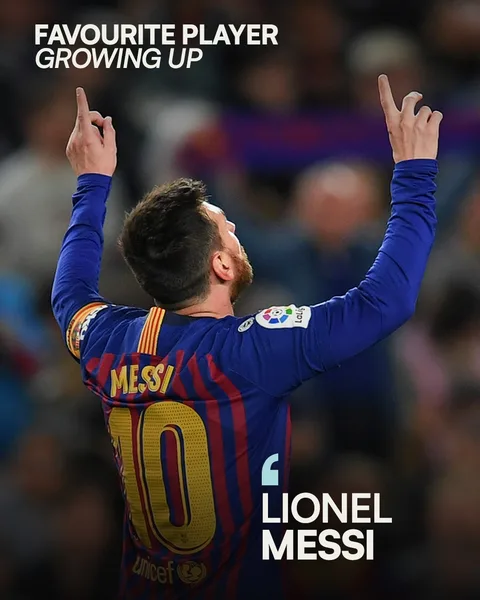
34:28 Marcus Younis No no no no no Yeah it's hard to say, you know, you got France who have probably the best team on paper, then you got Argentina who's obviously the a bit older but more experienced and then England who's also got a different but strong squad. I think if it's not France, it's Argentina. I think Argentina are just experienced. All right, it's an older squad, but you got Messi, obviously a moments player as well. My favorite of all time.
34:56 Jan Yeah, I think I'll go with the other option. I think France France is gonna make it.
35:00 Marcus Younis Too strong as well. I don't know. It's too str they're too strong as well.
35:03 Jan It's would will you watch a lot of games?
35:05 Marcus Younis Yeah, most games 'cause it's off season as well. Any chance I can get to watch, I'll watch and yeah, like like you said, France is where you got Olise he was on fire, you know, and Mbappe is back and this it's gonna be ridiculous. We'll see.
35:17 Jan when you're in season, would you say besides your own football, would you watch a lot of other football games to just educate yourself to to see
35:24 Marcus Younis Yeah.
35:24 Jan what other players are doing?
35:25 Marcus Younis Yeah, being at home as well by yourself, you know, when you're cooking, chuck the football on or if you're sitting down eating dinner, you chuck the football on You always had the football on and it was good being in Europe, you know. You had you were on so much better, you know. You either go at nine nine PM, watch a game and
35:36 Jan Yeah, it's it's way easier.
35:41 Marcus Younis go to bed, whereas in Australia you gotta wake up at three, four in the morning. was watching the Champions League final the other night, first five minutes I went to bed. I couldn't do it. I went back home, went to bed.
35:48 Jan Yeah, I know. It's tough.
35:50 Marcus Younis It was tough. But yeah, that that's cool. I I watched a lot of Champions League football, which was good.
35:54 Jan So obviously you still very young, you still have a long journey ahead. I usually ask guests the questions, the last ones were all a bit older. if there's something that they would change in terms of make a different decision in their in their career. if there's nothing for you right now, fine. Maybe that will be something in the conversation we maybe have in a few years' time. But if you have something that you would say, if I could go back in time, I would do this differently, would there be something?
36:18 Marcus Younis I think I said it I I said it before. I think I would just start worrying less and be a bit more grateful for my for the job. We have the best job in the world, guaranteed, I think. footballers, we train, go home at two PM and the rest of the day you have off. So I think just being grateful when things aren't going too well. things always work out the way they're supposed to. Time heals, So Football also changes really quick. One week you could be bad, the next week you could be, you know, on top of
36:43 Jan said, you've already learned that when a new coach comes in. Yeah.
36:45 Marcus Younis That's what happens, you know, you just never know. So I think it's really important to stay monotone and I used to ride the highs too high and then that was bad because then the lows became too low. So I think, if I could just be a bit more monotone and, be happy when things are good, but don't be too sad when things are bad.
37:00 Jan And then knowing that that things will get better again as well, that things always come
37:02 Marcus Younis Knowing things that will get better. That's right. So I think just understanding that that's the biggest thing.
37:06 Jan Yeah, Marcus, already amazing chat and I I will definitely follow what the next period will look like for you. To kind of bring the conversation to an end, I'm gonna just chuck a few questions at you. What is maybe one of the most unexpected places that football has taken you?
37:23 Marcus Younis in terms of like a city or like a
37:25 Jan Anything, whatever comes to mind.
37:26 Marcus Younis I recently played in Korea, so flying to Seoul and then flying again. I played in some random city in Korea, I don't really remember. That was pretty weird. It
37:34 Jan Yeah.
37:34 Marcus Younis was like I was in Squid Games. Like it was just a really it was a really, really weird city. I'd say that.
37:40 Jan Yeah, okay, that's a good one. one thing you always have in your kit bag that has nothing to do with football.
37:46 Marcus Younis I have a rosary bead. a rosary bead from my family, so that's something I I take with me every game. I hang it on my my jersey every game. Sort of a superstition as well. So yeah, I've a pretty pretty strong faith, It's the way I was sort of grown up So it's all very important to me. So I would say that my rosary bead.
38:02 Jan Yeah, great. still a very young career, but is there a moment already now that if you could you would want to relive?
38:09 Marcus Younis Yeah, definitely. I think my ninety third minute goal against Ulsan in the Asian Champions League to send us to the knockouts. I can't even describe what that was like.
38:16 Jan Yeah. Try.
38:20 Marcus Younis That was mental. I think it was the most euphoric moment I I'll ever experience. it was I remember No.
38:27 Jan No, don't say that. There will be a few more in the future.
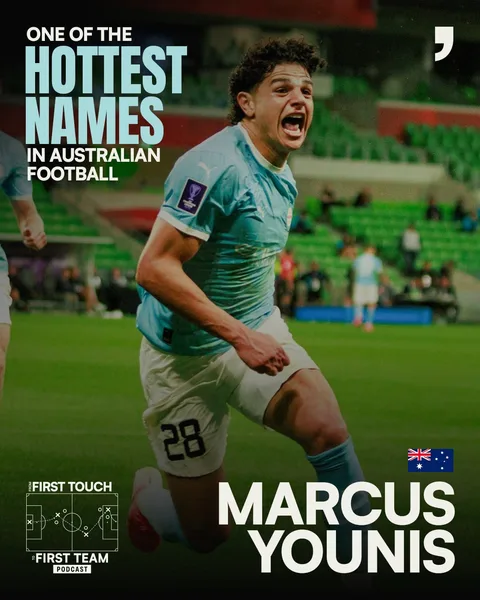
38:30 Marcus Younis But there were I remember ninety third minute, my legs were dead. It was like my second ninety minute game after not playing. I remember the ball comes over and then I don't I don't even remember looking at the ball. I remember just swinging my leg with my left foot and I made contact with the ball and then I ran off, took my jersey, and then all the boys came in together. So that was that was special. I'd never forget that.
38:49 Jan Yeah, unreal moment. hopefully there will be more of these moments coming in the future. Let's think back back to you being eleven years old before you signed with Wanderers Academy. what would that young boy say to you now at twenty years old, being a professional footballer, striving to play for the Socceroos.
39:08 Marcus Younis think when I was a when I was a young kid I had way too many aspirations. you know, my expectations were too too high. So I don't know if I fulfilled them yet. but I don't know how to answer it. I don't know.
39:18 Jan Do you think it would be more something like being like, Man, you've already achieved something great that was the dream, be proud? Would it be something like or would
39:24 Marcus Younis Yeah, I think yeah, I
39:26 Jan it be something like, Hey, you have not achieved anything, we wanna go higher?
39:28 Marcus Younis No, I think you're I think I want to go higher because I haven't really done done what I've done in Australia in Europe yet. So I think that's something as a young kid you you want to see and you want to do. but yeah, I think as a young kid I'd be proud of myself because of the resilience I've shown in in such tough times and performing when I need to perform. in such high pressure moments, I think that as well and yeah, I I think I'd be pretty proud of my efforts so far.
39:55 Jan Yeah, and I think you can be. So then l last
39:57 Marcus Younis Thank you.
39:58 Jan part. what is the best piece of advice you would wanna pass on to the younger generation, maybe our next guest that comes on?
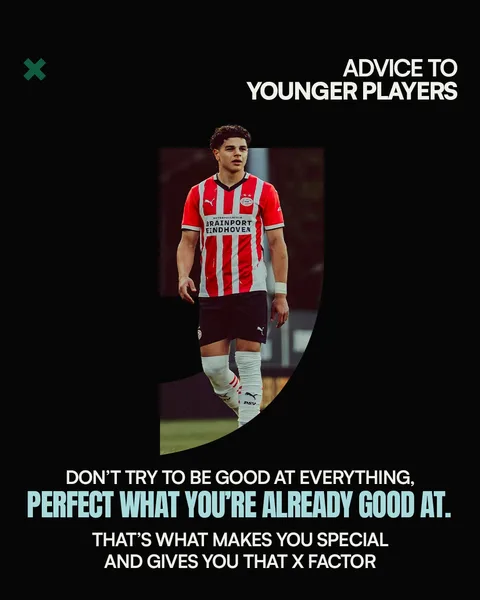
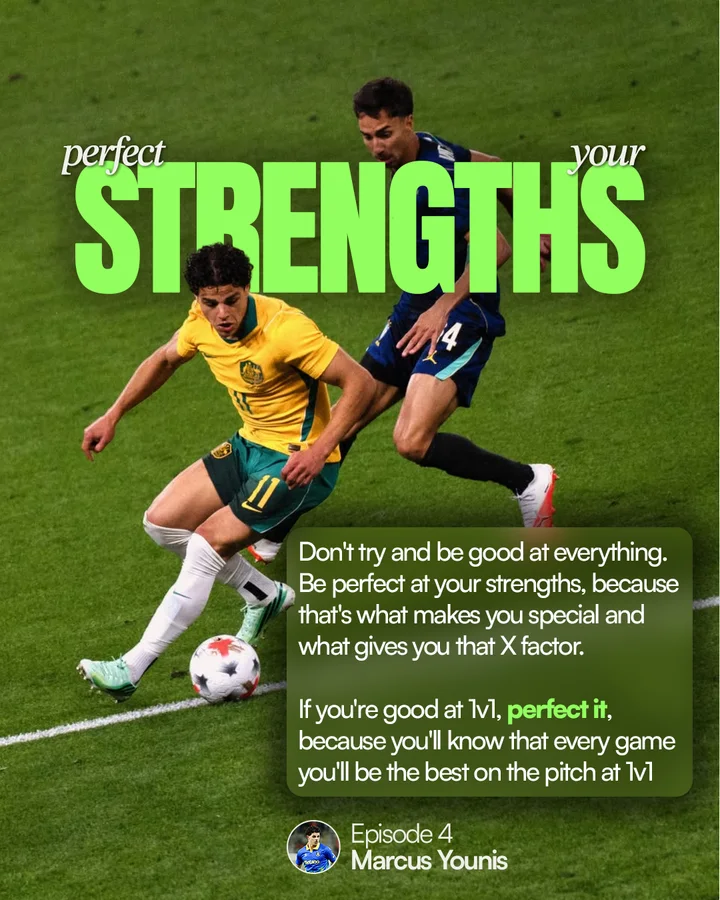
40:05 Marcus Younis I think I said it briefly before. for me the best piece of advice I ever got told was don't try and be good at everything, be perfect at your strengths because that's what makes you special and it's what gives you that X factor on the pitch, it's what makes you different. So I think all the young boys it's obviously and girls it's obviously important to work on your weaknesses, but work on your strengths, make them your sort of character and personality on the pitch, If you're good at one vs one, perfect one vs one. Because you know that every game you'll play, you'll be the best on the pitch at one vs one. So that that's what's gonna make you different. So I would say that don't try and be good at everything, but perfect your strengths.
40:41 Jan Yeah, I think that's a very good one. And that's the the confidence we probably have to install in young players to believe in themselves and know what their strengths are and what their positions are. a little question came just into my head. Who's winning a game of two touch, you or your sister? Yeah. more technical than you?
40:54 Marcus Younis My sister, hundred percent. Like no no no no like touch it. She's like she's the best touch I've ever seen. She
41:00 Jan Ha ha ha.
41:01 Marcus Younis she bounces a w ball against the wall, day I can't do that. She's unreal, I would say her.
41:05 Jan Love it. Marcus, thanks a lot for coming on. really enjoyed the chat. I hope that all the young players out there will keep following you, will keep following your journey. the episode when it comes out in a few weeks' time. Maybe we already know where your next city is. And I I wish you good luck for that next step of your career. I hope you will find a a place where you can connect to people where you can be the best version that you were. Yeah, in Melbourne this year and hopefully you can do that on the stage in Europe. And yeah, I think we can also hope that your predictions for Australia for the World Cup become true that we can all
41:37 Marcus Younis Okay.
41:38 Jan enjoy a very good good World Cup here in Australia.
41:40 Marcus Younis Thanks, Jani appreciate it. Thank you.
41:41 Jan Thanks, Marcus. Bye.
41:43 Marcus Younis Bye.