0:00 Daniel Solsky the first twelve games of the twenty twenty five season I was actually on the bench for first grade. So I was doing all that travelling, not even playing. I was almost done football. I almost quit football midway through last year.
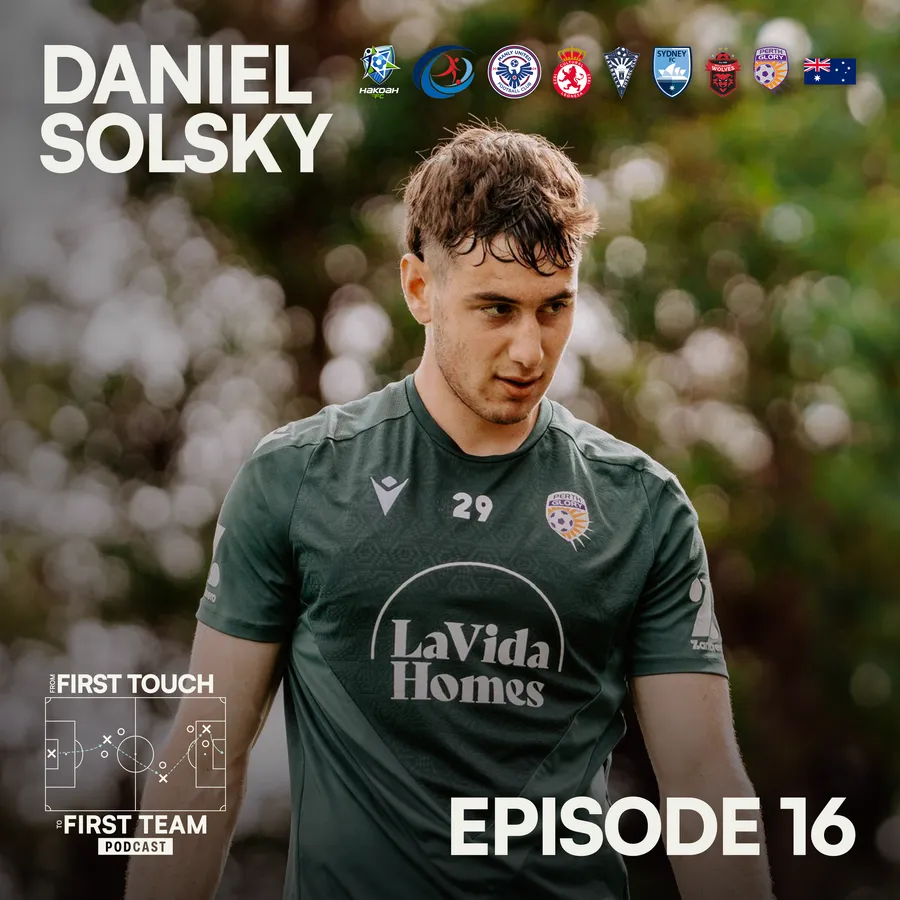
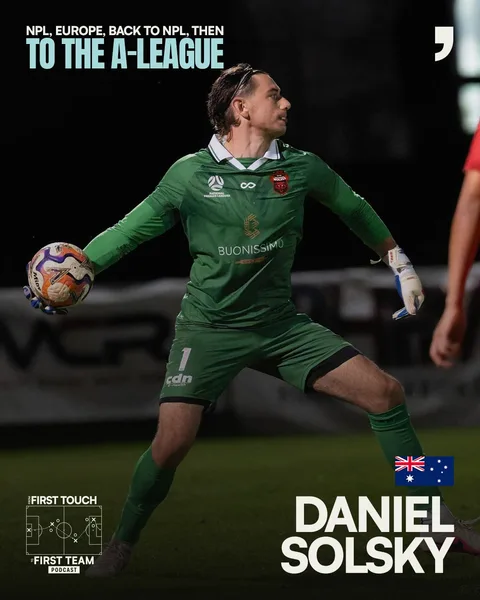
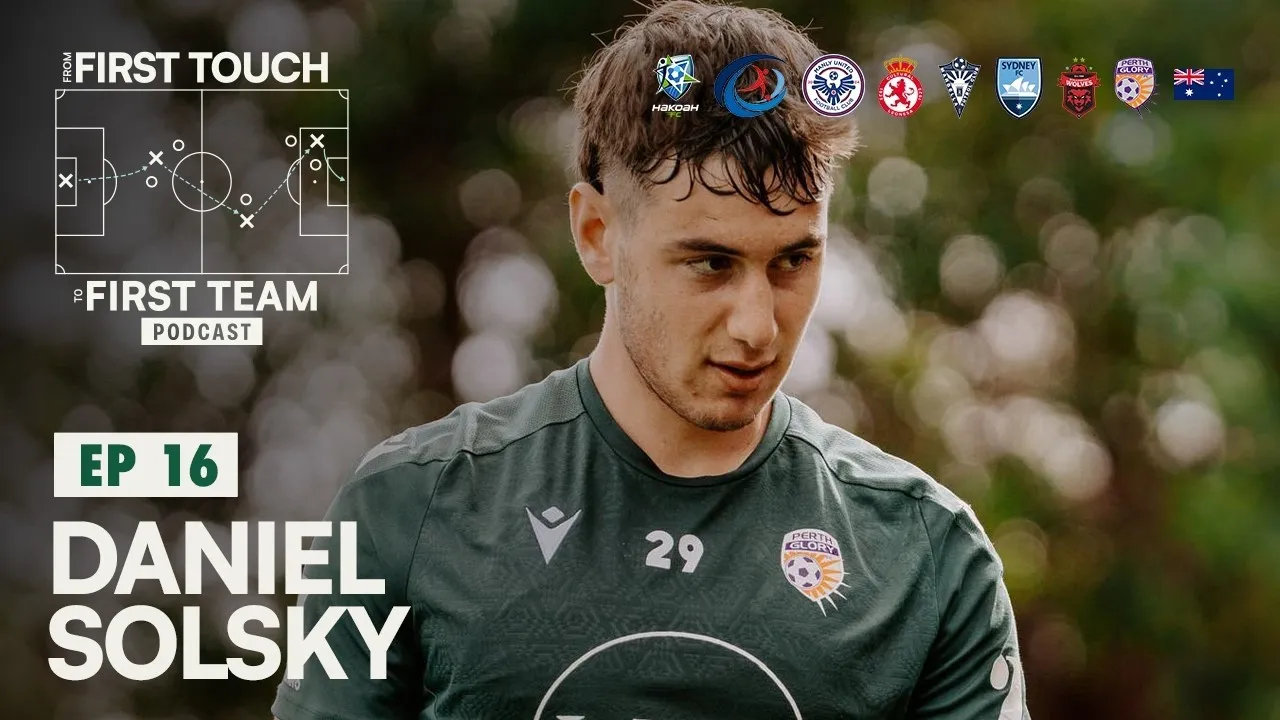
0:10 Jan Welcome back to From First Touch to First Team. I'm Jan, your host, and today I'm calling Perth to sit down with Danny Solsky. A goalkeeper who grew up in Sydney, never came to an A-League Academy, packed up his life at 18 years old to chase a professional career in Spain, came home without a contract, nearly quit football altogether midway through last year's NPL season, and then got a phone call from Perth Glory that changed everything. In this episode we get into what his journey actually looked like from playing Maccabi in under sixes To sign his first professional contract in the A League, why he almost walked away from the game for good, and what every young goalkeeper and player out there needs to hear about believing in yourself when nobody else does. Before we get into it, this show exists for one reason. To give young players and parents the real stories and honest advice they need to navigate the journey. If you believe in that mission, help us grow it. Share this episode with someone who needs to hear it. Leave a review on Spotify Apple Podcast and on Instagram. Comment and share the reels because that is how the algorithm works and that is how we and you can give the insights to more footballers out there. You are part of building something. Thanks for one thousand followers on Instagram. And now enjoy the episode with Daniel Solsky. Solsky, good afternoon. Welcome to the podcast from First Touch to First Team. Good to have you, my man. How
1:26 Daniel Solsky Is it?
1:27 Jan has Perth been treating you so far?
1:28 Daniel Solsky Thank you for thank you very much for having me. yeah, Perth's it's great. It's a great city. It's l a little bit different to Sydney to be fair. A little bit a little bit more quiet, a little bit slower paced, but it's it's it's a nice adjustment, like a little bit of a step back from the from the hecticness of Sydney. but yeah, no, it's good. It's a good it's a great city.
1:48 Jan And now middle of preseason, yeah.
1:49 Daniel Solsky Yeah, we're in the we're in the long preseason phase here. so we're what are we in? We've still got about seven weeks left, but no, that a lot of hard work. They they they they're working us hard here, but the team's coming together nicely and we're just gearing up for the season now.
2:05 Jan No, amazing. Before we go later on in this episode in the conversation around okay, how did you end up being at Perth Glory? I wanna give you first a chance to introduce yourself. so who is Daniel Solsky?
2:17 Daniel Solsky so Daniel Solsky is so I'm the the goalkeeper of Perth Glory now. obviously we'll get into my journey and how I ended up here throughout the episode, but yeah, twenty-three year old goalkeeper Perth Glory from from Sydney.
2:33 Jan Perfect. we obviously we met I think a few years ago where you had a little stint through Hakoah Obviously we're gonna get into
2:38 Daniel Solsky Yeah.
2:38 Jan the topic of like your youth there. I think the important part that I wanted to or why I wanted to have you on the episode is because you have a very unique story, you had to go from Australia to Europe, come back here, go back into the NPL and then now finally arrive at that level that you always wanted to achieve.
2:57 Daniel Solsky Mm-hmm.
2:57 Jan this will be the topic for this episode. We will start way further back. So we will start at your first touch. How did you get in into contact with football? what were the first steps like? yeah, take us back in time from what you can remember.
3:10 Daniel Solsky Yeah, that that's that's we're going back a while here. My I remember I was probably five years old when I started when I played for my first team, which was Maccabi, obviously the the f not the the feeder club if you could use that word for Hakoah and I was I think to be honest, not not pumping my own tires. I was a pretty naturally one of those kids who's like I thought it was was was natural with it at at age five, six and I was loving it. I just remember I was just just the moment I remember I could I could kick a ball, I was just obsessed with it and I was going to the park whenever I could with with my dad and and just kicking a ball and playing for Maccabi and I was actually an outfielder to start. and I I was I was quite good. I don't know what happened, but I So I at f at age five or six I I think if you told me I was gonna be a goalkeeper, no way. But I was just one of those things like like like a love at first sight thing when I first started playing and the enjoyment you get from from playing with teammates and scoring a goal and just my whole Saturday I just remember the moment you'd wake up in that Saturday morning knowing you you had your game for the Maccabi Lions, we were called my first team and and And just it was just one of those things that you just either know that feeling you that feeling when you have it as a young kid with the sport you love and it was just that. so yeah, that was
4:25 Jan Was there a was there a football background in your family or why was it football? Because obviously in Sydney, Australia it could have been a lot of other sports that are way
4:33 Daniel Solsky Yeah. True.
4:34 Jan more dominant here.
4:35 Daniel Solsky Yeah, well my my dad was a he he played, he was actually a goalkeeper as well. he would not he w he would say he he has probably more talent than I had, but he didn't have the same opportunity. But we never know. but he he was a goalkeeper, played for Hakoah first grade for many years and I think the the Jewish community of Sydney you grow up and they they they don't want you playing contact sport, the the mums are they're scared you're gonna get injured or hurt and I think football's a very natural sport that you grow up playing. And and yeah, but to be fair my my grandpa was was the the vice chairman of the F FA for for many years with Frank Lowy. So football's sorta been in the family. My uncle was a good footballer as well. So sorta one of those things that you sort of grew up there there was there was always a ball around a house somewhere that you were that you were kicking more than a more than a rugby ball or a or a cricket battery space. So I think you were sort of not really given a choice in the household I was growing up in.
5:33 Jan Yeah, perfect. And then back then you started as an outfield player. Did you aspire to become a professional footballer as an outfield player? And maybe who was your idol or what was it?
5:43 Daniel Solsky Yeah, definitely an outfield player. I never thought I'd 'cause honestly, I was a good young player. I I I actually don't know what happened from ages eight up 'cause 'cause growing up I was I definitely would say I I just had that knack for it and and I was I was always in the like the the good teams growing up in the A teams and everything and I think growing up I was I I was a big man United, I still am a Big Man United fan from my dad and from my uncle. So Wayne Rooney, Ronaldo, obviously growing up, they were they were the guys you watch. and yeah, I always thought I w I always wanted to be a footballer. Like from from when I could first understand and conceive what is life and and and understand what is life after. as you grow up it was like, okay, that's what I wanna do and I w that's what I wanna be. And seeing them on T V it was like, I wanna I wanna do that one day. I never thought it would be as a goalkeeper to be honest, but
6:35 Jan So then what then what happened? everyone's probably thinking now, how did he then go from outfit player pretty pretty talented, decent to then out of nowhere being like, Okay, is it one game he got tracked into goals or how was it?
6:47 Daniel Solsky So I I reckon I was maybe eight or nine years old and I remember I I was always in the A team, five, six, seven. And I think I I think at maybe eight or nine I got I got dropped to the B team. And I think it was a little bit of a r of a realization of I don't know what's happened here, but everyone's just got better and I haven't. And I still loved and I still playing. And then I remember maybe nine or ten. There was an injury for our goalkeeper and they said, All right, Daniel, we're gonna put you in goal and I think the coach of the time was a guy and I think I had a I I just must have done really well. I don't remember the day, but this is the story he tells me, my dad tells me. And Ross sort of turned to my dad and said, Like, yeah, like your son's got a bit about him as a as a goalkeeper. I think we should sort of pursue this if like now, like give him a I think we should start training him up as a goalkeeper. And I think I was just one of those kids you who who l who ended up just loving diving around, throwing themselves on the floor, a little bit of like a like there's something wrong with this kid in the head, but ultimately that
7:49 Jan that's what you usually say about all goalkeepers, no?
7:52 Daniel Solsky Exactly. So I I I I I ticked all the boxes perfectly. I was I was actually a wicket keeper in cricket. so I sort of had their natural hand eye coordination. I was quite a good wicket keeper and the the the skill transition was was somewhat it's somewhat c carried over to goalkeeping and I said, I just I loved just getting getting down, getting dirty and and just getting hit by balls and absolute s psych psych psychotic. But like you said, it's the tendency you sort of need as a goalkeeper. And then from there I think it's just again, I just fell in love with it. And I got my first pair of gloves and I started training up as a goalkeeper. And I think it was somewhat beneficial that I'd had those years as an outfielder 'cause you do develop those ball skills a little bit. who I didn't know how the modern day football would work out where a goalkeeper really needed to be an eleventh player, but I think those five years as an outfielder growing up, doing a lot of technical stuff has been to my has been very beneficial for me now. And And then yeah, it was just got those first pair of gloves and just get got straight into it and and from there I never I never looked back really. I think it's the best thing that's ever happened to me, that that that I that that kid that kid got injured and that I got put in goals that day 'cause it's it's shaped me into the person I am today.
9:07 Jan And big shout out to the coach who identified a little bit of talent in you as a goalkeeper,
9:11 Daniel Solsky ~
9:11 Jan right?
9:12 Daniel Solsky A a hundred percent. So it's Ross, if you're listening to this, mate, thank you for doing that. And and to Dad ~
9:18 Jan Definitely send him this episode to him as a big shout out to him and as a thank you for
9:22 Daniel Solsky I'll have to.
9:22 Jan getting you to where you are now.
9:24 Daniel Solsky one hundred percent. I'll I'll have to give him a big yeah, big, big raps to him. So he'll have to he'll know he knows he knows that he played that role. Yeah.
9:32 Jan when you're coming to Sydney to play against Sydney of C you're gonna have to give him VIP treatments and
9:38 Daniel Solsky Yeah, that that's true. That's true. so Ross, you he when you hear this, hit me up and we'll sort that out for the game. But yeah, no it's fun.
9:44 Jan Perfect. So then talkers for the next years, you then start to become a goalkeeper, you had Maccabi I assume you're doing well, you're then progressing into NPL, youth, Hakoah What do the next years
9:56 Daniel Solsky Yeah.
9:56 Jan look like? And what would you say from what you remember around that time? Did then the way you watch maybe other football games change? Because as an outfit player, you watch your players in your position, you watch what happens on the ball.
10:08 Daniel Solsky Yeah.
10:09 Jan Would you start to look at okay, how do the goalkeepers do their preparation What do they do in the day the game? Would that change for you?
10:13 Daniel Solsky Yeah. Well, yeah, so so I trialed for a club. So I was in Maccabi till ten and then you move on to what it w at that time it was SAP. I think it's still around. but Maccabi Hakoah didn't have a team at that time and I'd obviously never really played a year in golf. So I went to trial at the local team which was called ESFA, Eastern
10:33 Jan Yep.
10:34 Daniel Solsky Suburbs Football Association. And honestly, within about I think it was about ten minutes of of that trial, they they said, All right, we're gonna we're gonna sign you, and I was I was buzzing. I was absolutely like, my god, I like I mean sap, and it was I think it was a good level. I think we played against like RP or Sutherland, City Olympic at that time. so they signed me there and I I just I was working with so I started working with a goalkeeper coach there, Trinity Allen, who is still the goalkeeper coach. I still use that same brand of gloves today, never change that that's the ones that I'll I think I'll use pretty much forever. and Yeah, he was an amazing coach to have for a first coach and just really taught me the basics and fundamentals 'cause I never really had had a goalkeeper coach, obviously growing up as an outfielder. So there was a lot to learn. I think I was a very it was probably a bit frustrating for coaches at times 'cause I was a bit behind a lot of keepers in terms of their technical s work, to be honest. and even today I think i I still don't think I'm the most polished goalkeeper. I think if you look at me in a lot of trainings I I I still you can sorta still see that I was a bit late to start as an eleven year old as opposed to maybe a five year old. but I think yeah, well that maybe that's for later to talk about. But So yeah, so I became a goalkeeper and then yeah, I think I started started watching everything a little bit differently in terms of what instead of watching Ronaldo and Rooney, maybe and I was now starting to watch David De Gea or Edwin van der Sar
11:56 Jan Yeah.
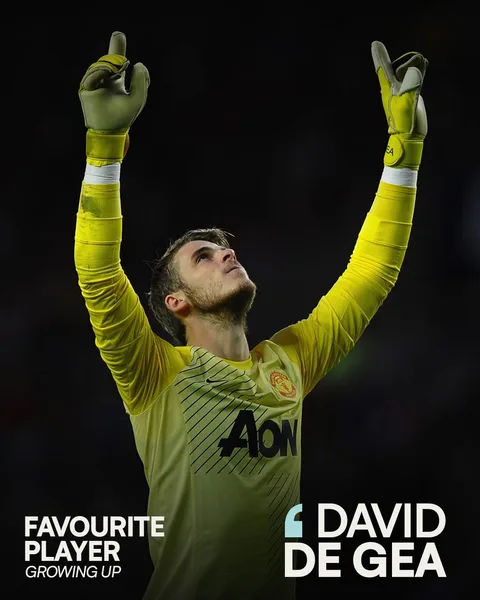
11:56 Daniel Solsky and obviously that age you don't really understand football enough, or at least (At a young age) I didn't understand football enough to really w look at intricacies or look at details of what ke goalkeepers are doing, how they're playing, but it was more just the obsession with keeping the ball out of the net for me. And that's the the model of goalkeeper that I That I model myself on today and that I pride myself on is that I'm just someone who'll keep the ball out the net. and that's that and I think watching the the the main goalkeeper for me what when I look back and think of who who that guy was, that was David De Gea. And I think he was the f the real this guy wins points for Manchester United. This guy is put United in Champions League when we were probably a bottom half team in seasons. And that was I remember just thinking, like, my word, like it go this look at the role that a goalkeeper can play in a team and the importance
12:43 Jan Right.
12:44 Daniel Solsky that they can do. And that was, he's the guy that made me think, like, yeah, that's what I want to be like. You know, like everyone, I think they love Manuel Neuer growing up and he does he does he did special things. You know, he revolutionized probably what the modern day goalkeeper is. But it was never me. I saw him doing flicks over people and nutmegging strikers, and I'm thinking that that'll never be Daniel Solsky. But
13:04 Jan Yeah.
13:05 Daniel Solsky seeing De Gea make twelve saves a game to win a game 1-0, I was like, yeah, that's that's the goalkeeper that I
13:10 Jan Yeah.
13:11 Daniel Solsky want to be. and then I think as you
13:12 Jan And I think that's perfect because because that shows that the game is evolving and every single position becomes like more roles and more importance. But I think sometimes
13:21 Daniel Solsky Yeah.
13:22 Jan it's important to break it down again, like you said, and say, Okay, I'm a goalkeeper, what is the the ninety five percent of the game, what is my role? Is protect the goal and don't let any goals in. So I think that's
13:30 Daniel Solsky Exactly. Exactly.
13:33 Jan a it's a good part that you already started at an early age to start to think about, okay, what is my role and what do I want to do and how do I want to be seen? What
13:40 Daniel Solsky Yeah, one hundred percent.
13:42 Jan So how important are clean sheets to you then?
13:44 Daniel Solsky they're they're everything. They they they can make or break my weekend to be honest. Like Thing for me was getting finishing a game, and you just know you've got the clean sheet. There's no head noise of gonna look back at the goal ten times, you can see it analyzing it. There's just you I can sleep well. I'm everything's just better for those three days after. Even if we win like 3 1, I'm still there's still a little bit of me that's a little bit like why is there one? So that
14:10 Jan Yeah.
14:11 Daniel Solsky I do pride myself in that and that department. so yeah, for a goalkeeper. but it's it's like scoring a goal, when you had a clean sheet, it's that that's what that's your job done for the team. So ~
14:22 Jan Yes.
14:23 Daniel Solsky no, I love it. No, it's a great feeling.
14:25 Jan So then you said joining S Far playing the next year then obviously that's still small sided games, right? during that time would you say looking
14:33 Daniel Solsky Yeah.
14:33 Jan back, would you still spend a fair bit of time playing like in training at least outfield or would you say majority of the time was just like purely goalkeeping and just working on goalkeeping technique?
14:44 Daniel Solsky We had three goalkeepers over two teams. So what they actually did was every week one of the goalkeepers would play on the outfield. and you'd rotate that. So I think again, that's beneficial to continue to not only get the technical ability but the understanding of football. Because as you move from a five a side to seven and seven to nine, and you sort of understand what each role has to do and how that can ultimately impact the goalkeeper and what you need from a striker, what you need from a centre. Or a fullback. I think indirectly I was starting to build understanding of that simultaneously, which is really important. and then yeah, we were getting technical training once or twice a week with Trinity, but I think in in the trainings we were we were only in goal, but then come and match day every third week, you would be on the outfield for one of them. So you were always playing pretty much a full game, whether that was in goal or in the outfield. But yeah, it was seven aside maybe. But to be honest, I don't think I loved that I just wanted to be in goal. I d I didn't love playing up top or even I d I didn't even want to score goals. I just wanted to save him. so so that was a good year for me. I think that was also a year that people started to realise like this guy's actually got a bit about him because I at the end of that season I I got invited to it was called Institute at the time, which was
15:58 Jan Yeah.
15:58 Daniel Solsky like they they got rid of it now, but they invited me to trial for that, which was like the like the maybe the six best kids of my of our age went in goals and I never got picked. They had four keys they picked. I wasn't even I was one of the two that didn't, and then one of the kids of the four pulled out. And I still didn't get in. So I was the last of the six. So I I I I didn't get in. but that was cool. That was Željko Kalac was the coach and goalkeeper coach and I remember like it was just yeah, I look looking back on it, I probably wasn't quite at that level, of the kids who had probably had been in like Sydney Olympic training system for year for a few years and I remember St George and they're in NPL one. So I was sorta just that kid who just just got thrown in there and I was bit I was a bit off the pace but I w it was definitely a good sign for me, like, they wanted you here and and they they like to get the trial, that was cool. And then from there we went and then Hakoah was was the next year. So that was under twelves in the first year of NPL and we were in NPL two and that was a an easy decision for me when I think there was like opportunity to go try with NPL one clubs, but all my friends were were going to Hakoah. My dad was I had obviously played first grade and I think it was the first year that they got into that NPL youth system, so there was a bit of buzz about it and Again, I remember going to Centennial Park. Brazilian fields for our trial there and and I think there was there was probably eight goalkeepers trialing for that position and yeah I think I again on that first day I think they they said to me, Yeah, well we want to sign you and that was that was what a feeling that was. all the boys are getting signed that you'd played with with you'd played on Maccabi with them from age five and now you're an NPL and you're in like in our head it felt like the big leagues. Like even though it was only NPL two hundred twelves, you'd felt like, now we're playing against Fraser Park and C. Sydney uni who at the time were a big team and and and that was awesome. And I don't know if you to go into too much detail, but that year we ended up I think we finished second and we had a big group of Jewish boys who'd sort of come through the ranks and Maccabi together, so you sort of all played with each other. So it's a really cool full circle moment from like being a five-year-old to going to like the the state level as a twelve-year-old and actually doing really well. That was really cool. That was my first year on full size field. I remembered every shot high was just a goal. Because like you just ~
18:16 Jan Yeah.
18:16 Daniel Solsky you're like a little twelve year old kid and I'm a big boy now, but I was a I was a late developer and and I couldn't it was like the most cheat code thing if you could kick the ball in the air at that age. Like because the key bus is the key is just
18:26 Jan And it still happens these days. It still happens.
18:31 Daniel Solsky it's it's brutal. Like if you were if you were fast or you could kick the ball high, you were like The most valuable player in the competition 'cause there was only a few of but we had a couple which I think helped us get get up the ladder that year. That was good.
18:42 Jan So then obviously great memories in youth football. what is interesting to me is obviously you had your first parts of okay, being invited to a trial, not succeeding, seeing players being ahead of you. How did you deal with that? And what would you say did you spend most of your time with besides team training, besides the club environment? Would you still be out and about and just kick a ball? Because obviously As a player you spend a lot of time with the ball and the goalkeeper is a bit harder because you can't do that much goalkeeping by yourself. How
19:11 Daniel Solsky Mm.
19:12 Jan would you spend your week how football obsessed was were you back in the desk?
19:16 Daniel Solsky I was football obsessed, but I think I also didn't understand what football obsessed really meant. I think I I thought I was football obsessed and obviously later down the line you you you learn what you really need. But at that point, you know, I was I was just like any other eleven, twelve year old going to Moriah College with my mates every day. We were kicking them all at lunch, playing for the school team, training two, three times a week with Hakoah. but I wasn't someone who was I think I maybe did twice a week with Hakoah and then one night with the goalkeeper coach Trinity. down at David Phillips. But and I thought I was doing a lot, I thought I was doing three nights a week and I was still obviously at school and focusing on my on my school as as the Jewish kids are told to do. and so I mean I don't think I was someone who was going down doing extras because they just didn't I didn't really know what extras were, to be honest. I th I sort
20:05 Jan Yeah.
20:05 Daniel Solsky of thought if you were doing two nights a week and that extra all goalkeeping session I was flying and you know if I was at a holiday with my family I remember this vividly. I'd always bring a football in my gloves and my dad would shoot kick balls at me and we'd go do kicking in the park. But it was never anything structured that okay, I'm doing my three sessions and I've got to go do another two by myself. It was never that. It was just tr do what's in front of me, do what my parents said. This is training, this you this is the days you're training. Maybe at school we do another one session with the school team. But it was very very laid back in in hindsight. I I
20:38 Jan Yeah.
20:39 Daniel Solsky I I I yeah.
20:40 Jan You you mentioned your dad, so that's an interesting one. Obviously this podcast is one for players but also for parents that are listening and your dad was a player himself as well. He wasn't goal, I assumed he played back in the days that was the NSL at his time, or maybe he was already NPL, but he obviously played
20:52 Daniel Solsky Yeah. Yeah.
20:55 Jan at a good good state level. Was
20:56 Daniel Solsky Yeah.
20:57 Jan he was he like what kind of dad was he? was he very on like on you as a goalkeeper or is he just like whatever he wants to do? Did he give you coaching points? Did he give you feedback? What would you say?
21:07 Daniel Solsky It's a it's funny this topic. So he was the my unofficial second goalkeeper. It's just Trinity who I'd trained with in the night. He didn't come to games and stuff. So my dad would warm me up every game day from probably under twelves to maybe even under sixteen, I wanna say he was still warming me up. Every would not missing I think he missed maybe two games, like when he was overseas and stuff. And he was one of those dads who He demanded a lot from me, but at the same time, like he was just so I think he just loved seeing me in that environment that like he was almost like He he wasn't one of those dads who if you had a good game but you made one mistake he's on you for that mistake. He wasn't like that, but he's a he he he he he was like he wanted to just see you succeed, see you do well and he he did have high expectations like if I had a bad game even as a 13-year-old he would let me know. I've always just said it was as much his journey as it was mine, he's like my role model, my my absolute he's my best friend. And he was the guy who just did everything for me where he was driving me out to Valentine Park for his institute trials there and back, taking time off work if he needed. He was there every game, I said, warming me up and he wanted the best for me. So I think and that element there was like he was a bit hard on me. But at the same time, like he was also the first person to let you know if you had a good game and show you love and and and and let you know how well you've done. And there was just he just loved it. he'd be on the field with his boots on, gloves on before a game at Hensley just leathering half volleys from me outside the box and he like he and and it and he just he w I've done a few overseas tours. I've been very lucky growing up. I was in I went to a tournament in Morocco and a tournament in New Zealand and he and he actually came as a team manager on both of those where it wasn't even to do with Hakoah, it was I won't get into that, but the the point of that is like he's just he's just he's been on this journey with me every step of way and he's just one of those guys where I I've wanted he'll I'm sure he'll he'll he'll listen to this so he he'll he'll he'll be he knows all this but I've wanted to do it for him as much as for myself because of the amount and my mum of course but he's really it's I think it it was also his dream to be the a footballer and and we've really been on this journey the whole way so getting to where I am today knowing we've had this whole under twelves to now process is is a really
23:28 Jan Yeah, I love that. so big shout out to your dad as well. And it's something that I thought when I started the podcast as well. It's like I wanna obviously speak to the players how they got there, but also give players a chance to say thank you to the people that helped them on the way. You're mentioned now your initial coach who put you into the goal, you managed Trinity who shaped you as a goalkeeper who helped you at the beginning and then throughout your career,
23:49 Daniel Solsky Yeah.
23:50 Jan your dad warming you up each weekend and maybe giving like one or two pieces of advice and feedback after a game. ~
23:54 Daniel Solsky Yeah. Yeah.
23:56 Jan so Amazing. Let's go a few years ahead. You you're finishing youth at Hakoah and then you're progressing into first grade. How was that step for you? What changed?
24:06 Daniel Solsky Yeah. Quick shout out to the under 16 boys at Hakoah We won the league that year in NPL One. Highlight of my youth football career for sure. So just quick shout-out. That
24:14 Jan Very good.
24:15 Daniel Solsky was a special group. So I just had to get that in there. so that was so sixteens. So yeah, we won the league that year. Unbelievable. We're on top of the world, NPL one. And then what happened was they split up that
24:26 Jan Quick question quick question on that, did any of the boys from that team that was obviously then a very talented group go on to do something with football still? Or at least like going into men's football and still playing?
24:36 Daniel Solsky Yeah, so Ben and Josh Fuchs and Hakoah are still playing. Michael Vakis who was at Olympic and now at Hurstville. ~
24:43 Jan Think, yeah.
24:44 Daniel Solsky Jared Frack who is he went to college, had a couple of injuries, but he he's he's still playing Hakoah first grade. I think that could be it. I hope I haven't forgot anyone that'll kill me. Ollie Jones is playing now at Randers in in in Denmark.
24:58 Jan Yeah.
24:59 Daniel Solsky so we had a pretty good team that year. So but yeah, it's probably five or six me and Ollie are probably the two that have kicked kicked on a little bit. but like
25:07 Jan The most, yeah. Yeah.
25:09 Daniel Solsky Vakis was killing NPL one and Ben and Josh could come play NPL one, no issue. And and Jared's been injured. But like yeah, I think there's a there's a lot of boys there who have done quite well to be fair. So I had to shout at that team. That was a special team. yeah.
25:20 Jan Yeah, very good. Yeah. Love it. So then talk us through that next chapter, the next step, what happened?
25:26 Daniel Solsky Yeah, yeah, yeah. So they ended up splitting I don't know why this happened, but they put half of that team to under twenties and half to under eighteens for the next year. and I remember getting the email that I was I was one of the eighteens. So like it was sort of a I didn't love that 'cause they sort of broke up that group. and then what ended up happening was so yeah, I was Yeah, I still at this point it gives you good idea. I wasn't anything special at all. not that I'm anything special now, but I'm saying you wouldn't have picked me to be the guy who's ended up getting to the A League because I wasn't even getting that the top half of that 16s group. and I we that was the COVID year, and but I was in year 12 at school and I was adamant to keep playing football. A lot of boys started to drop out, focus on studying, and I was adamant that I was gonna keep playing. and it was probably better for. me that I was in that 18s group because it was a little bit more laid back. It was still was it still youth football at that time? I think it was still youth 18s and 20s and first grade
26:25 Jan Yeah.
26:25 Daniel Solsky to go into senior. So then it was still a little bit more laid back. It wasn't such a big jump physically and the and the demand was a bit less. I could sort of balance football and and score a little bit more. And so I was I was a six sixteen, seventeen year old and I w our team wasn't great to be honest. Like we we were sort of getting battered a little bit, but It was a good chance for me to make saves and show what I was doing. And I think people could s could see I doubt I I was I was probably one of the stronger players in the team. And at that point, I was sixteens coach and I ended up getting the first grade gig at Hakoah. And he he li he raided me. and he was bringing me in a lot to train first grade and I was which was good. So I was I think it was one of those things where there was older guys who were playing twenties and it was a little bit of like he's older, he's gonna play. So that might have been the reason. And I never got went and progressed there, but it worked well for me. I was playing the eighteens games on the weekends and doing a lot of first grade trading throughout the week at like 16 and and then that was twenty twenty nineteen, twenty twenty, and then yeah, so COVID hit and I think I don't even remember what happened if they stopped football or or what. I think we had to stop
27:32 Jan Yeah, I think that definitely a lot of a lot of stuff was was paused for a while.
27:36 Daniel Solsky I I think we stopped for a bit and you had that social distancing training which is weird and it was just w it was a weird time. It was all that to be honest, that's a bit of a blur for me that whole period, like of what actually happened. but It ended up getting to twenty twenty and COVID had moved on and we were getting back into it and I was I was still playing that eighteens team and I finished that season just a bit of first grade training and playing and playing there. And then the next season they moved me up to twenties, but I was sort of like a first grade player. Like I was training first grade every day and just playing twenties and and that was cool. I I made I made my first grade debut there at Hakoah at at I was actually 16 in a friendly against Sydney United. Came on for the last five minutes and I copped a goal. great
28:23 Jan Great start.
28:25 Daniel Solsky start. I I I remember I was so intimidated. I was like this little I could barely take a goal kick still at that age. And I remember coming on and I was and I I was I was just so like, my god, this is Sydney United and I was a little kid. and then and then yeah so then Twenty twenty twenty twenty one I played that season in twenties at Hakoah and ended up getting a first grade debut in the FFA Cup that year against Parramatta. We won two nil at Hensley. I was seventeen, that was awesome.
28:53 Jan Clean sheet.
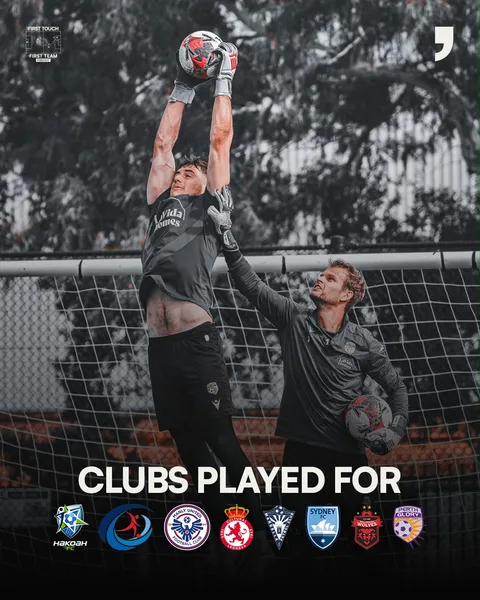
28:54 Daniel Solsky Clean Sheet, that was an awesome one of my defenders cleared a ball off the line that day, so he credit goes out to him. But yeah, that that was awesome. That was a proud day. and that was that was the end of I I graduated school and I was sort of just I was doing a bit of training with Sydney FC NPL in the mornings there and and training Hakoah at night and this is when I started to really put my foot on the gas about my football and I s was like, you know what, you finished school now, you've got a decent ATI, you but like it's now I was already getting old, I was already seventeen and it was like, All right, I still have this aspiration, you're not gonna get it by playing Training two nights a week at our co-op, you've got to start to to look to progress. And I that's when I Trinity that coach, he he arranged for me a trial at Sydney FC because I was I was still doing quite well and to I think I was still a stronger keeper in my age group. I didn't end up getting signed at Sydney, but they said to me a coach Dave Plowright, who this will be a full circle moment, and I talk about Perth, but he said to me, he was the NPL keeper coach, he said, Yeah, come and train as much as you want. And I was there, this my dad is driving me there. I didn't have my P's at the time. he was driving me three, four mornings a week. week to train at Sydney, just to train with the NPL and just get that quality of goalkeeper coaching in. And that was awesome. that was that was probably another huge step for my growth of being in that that was the first full-time environment where you're getting goalkeeper coach three, four days a week and training in Hakoah that at night in the twenties and getting a bit of first grade training as well. And and that was a huge development yeah in that first year of 2021. And then that season finished and I was like, I need a change. I've been I've been in the club for seven, eight years now, and that was where Trinity was coaching at Manly United. And he said to me, I want to bring you over to Manly. And I went over there 2021 and that was he signed me as a 20s player. and the head coach of first grade was Adam Griffiths, who full circle moment is now the Perth
30:52 Jan d
30:52 Daniel Solsky Glory head coach. And I came in there and to be honest just hit the ground running. they had a couple of injuries in first grade in goal and they ended up bringing me up to first grade within a month. And I to be honest, I I think I just did really well as an eighteen year old, never been in a first grade environment fully. I was you know, I I remember getting added to the first grade group chat and players group chat and was like, This is really cool. Like twelve months ago I was playing Hakoah eighteens. and I did really well there to be honest. I Griff introduced he really I think he really believed in me at that time as an eighteen year old and trained really well and played five or six fur preseason matches in first grade and and don't think I would say killed in the matches. I think I think I did all right. But I I think I'd I think I'd shown to people I had a little bit about me coming into that environment, I think that showed the started to show the character I was. I think I it integrated really well into the team there. And they treated me really well. Like that that I always say like that little eight months of manly was imperative for my career. Learning a bit about senior football, learning how to integrate into a change room. Yeah. Yeah. Yeah. Yeah. Yeah.
31:56 Jan Was that the season where mainly where mainly ended up playing in the finals itself? There was a very strong team, right? With with Saya that is not up here, I think where you were Bruno, Bruno Mendes as well back in the days. Yeah.
32:06 Daniel Solsky Yeah, Bruno I he he he went with me from Hakoah. He he was so we
32:10 Jan Yeah.
32:11 Daniel Solsky both went from Hakoah to Manly that year. I rem yeah, this I remember texting him about that actually when he signed. that was cool. I was like, I'm coming too. that was a top team. So that as an eighteen year old being in that team, I was buzzing. I I learned so much that year from senior players in that team, they might not even remember me, but the captain Jimmy O, Sayar, Bruno, like they were like guys like I learned a lot from in hindsight and that that that was unbelievable. but still my dream was always to go overseas and it was one of those dreams looking back which is a little bit naive, how are you going overseas playing our co you've never you were never really like that kid growing up who was always gonna make it, but I I always had that dream and I think I was very fortunate that my my parents were very supportive of that dream and an opportunity came up, I remember, in December 2021. There's always those agents who work to get guys overseas and a a a man, he was actually like he you know Mongo Football? I'm not sure if you know it in the north.
33:10 Jan Yeah. I've heard I've heard about them before, yeah.
33:12 Daniel Solsky So he yeah, he he runs Mongo and he he was actually the guy who took me to that Morocco tour when I was a young kid and he he had a lot of c he was an ex player, top professional player and he had connections all over and him and my dad became good friends. My dad is the manager, I was saying, on that Morocco tour and they that we we we kept in touch over the years and Pretty much he rung my dad one day saying, I've got an opportunity for Dan to go and trial in a place called León, L E O N in the north of Spain, at a club called Cultural Leonesa for their second team as one of their goalkeepers. And now the all the all the talk became like, all right, mate, put your money where your mouth is go pack up Bondi from living in Bondi as an eighteen year old and go move across the world to a little tiny town and now go and go and do it. and my parents were unbelievably supportive. I didn't realise at the time the logistical and financial commitment they made to actually send you over there and for visas and all these opportunities and housing you there and flights and at the time I didn't realise but of course they they they they made this sacrifice for me I think knowing how much I wanted it and they'd seen throughout that year that the the sacrifice I'd done go to Sydney FC in the morning, manly at night. I was I was I was committed. I was I was doing a lot. I was showing them that I really wanted to do it and
34:29 Jan Yeah.
34:29 Daniel Solsky They gave me that opportunity and on March fifteenth, twenty twenty two, I went over. So to give you a bit of context, I I sh I missed out. I pretty much spoke to Griffo in February. At that time the the first red key would come back anyway, and I would have been probably the number two, playing twenties. And like I and I said to him, Look, Griff, this ob there's an opportunity that's come up to go trial in Spain and and it's and I remember he said, Is this something you wanna do? And I said, It is and he said, Then go do it, mate, and and and go and give it give it your all and went over in March of twenty twenty two and flew over there with my dad and yeah, that was I don't I don't even know where to start, but we w touched down in Madrid.
35:06 Jan It's wild, you're the second you're the second player that is now talking about Griffith because I had Kealey Adamson a few weeks ago and he had him as
35:13 Daniel Solsky Yeah.
35:14 Jan a youth coach at Northern Tigers. ~
35:17 Daniel Solsky Yeah.
35:17 Jan was it I think it was a Tigers and he gave him like his first like ball mastery drills and he still speaks highly
35:22 Daniel Solsky Yeah, I saw that.
35:23 Jan of him that he that he changed kind of like his his his way of seeing things. So yeah, great work and obviously he got to the level that he's at now, through all of these
35:31 Daniel Solsky Yeah.
35:32 Jan years of of sharing system. Before we go on into the next part of making that move overseas and maybe one or two challenges that came with that and the experience, looking back now on your whole youth career, is there something that you would do differently looking back for your game, for I don't know, like your overall development?
35:51 Daniel Solsky To be honest, I think it's easy in looking back, I just y you realize how much more you needed to be doing. And I think I I don't think I think it's that's very much in hindsight 'cause at the time I didn't I was I had no idea about the demands of actual professional football and what guys overseas were doing and neither did my parents, neither did coaches in Australia really who haven't played. Obviously you're you're from Germany, so you you probably had a better idea. But for Australian coaches, they didn't know. So I think in reality, I don't think I'd do anything differently 'cause I really wasn't to know and I don't think there was anyone to know. But with my kid, if they want to go through that journey, they'll There'll I'm not gonna be someone who pushes my kid to say you have to go train ten times a week, but just an un education of all right what it actually takes to really become a footballer, because I think I was ended up and I'll talk about that in my next in this next part of the the podcast, but I played a big catch-up game from twenty twenty two to twenty twenty five, really, and caught trying to catch up on the the whole youth of not getting that. quality training in for enough, so of enough enough quality training in. So th the only thing I do differently was the volume of training, but like I said, I wasn't I wasn't to know what you really need to be doing. So I think no. I think
37:05 Jan Yeah.
37:06 Daniel Solsky I also think that my childhood allowed me to really I finished I graduated school, got a g I'm studying at university, still I have the the best friends in the world, I think. I I was able to really live an amazing childhood, which I'm so blessed for 'cause I think if you said to me, You've got to go and move overseas at fourteen and then you forego everything that you've had growing up, I don't think I'd do it 'cause For me that's still one of like it's the childhood I had I look back on with the best memories of school and friends and I wouldn't wanna give that up either. So I I don't think I'd do anything differently to be honest.
37:39 Jan Yeah, that and that's perfectly fine because I've the the the big challenge and what I've seen over the some of the episodes now and like especially players I talk to that growing up here in Australia, is the environment is shaped around you, so you only know what the environment tells you. But the
37:55 Daniel Solsky For sure.
37:55 Jan big part is as well that for example Zac Sapsford said to me, is like looking back now, I'm so grateful I had a like similar to you, a full youth, I got to enjoy, you know, school, I didn't have to train crazy amounts But with each year I got older and towards a senior level, it slowly, slowly increased and that ultimately he flourished at a later stage than maybe a lot of other players. And now
38:16 Daniel Solsky Yeah. Yeah.
38:17 Jan he's playing in a league and you're playing professionally now as well, where maybe there's a lot of players that were part of a A League Academy setup in
38:25 Daniel Solsky Exactly.
38:26 Jan in the UK, in a Premier League Academy setup, that had to do all of that through their whole youth, they didn't get to live, and then they arrived at that age twenty, twenty-one, twenty-two. But they didn't make it. So I strongly believe that sometimes it is more important to go start low and gradually go higher and higher and higher rather than being the best player in under thirteens, fourteens, and then gradually towards the senior level go lower and lower and lower because then when you arrive at that level where you need to be ready, you maybe not anymore.
38:55 Daniel Solsky A hundred percent. yeah, you've said that spot on. nothing.
38:58 Jan Yes. So then for you the question is, you mentioned you had to play a bit of a catch up game. What was maybe we don't have to go into much detail into the fact that you went to Spain, that you started to play over there, but what would you say arriving there, what was the biggest difference that you saw from being used to training in Australia to then being training in Spain?
39:17 Daniel Solsky Just the the detail, firstly. I remember getting to the first video session and sitting there and at that time I didn't I didn't even speak Spanish. So it's like I was sitting there listening to pretty much Chinese, it could have been, and but the detail in which they analyze opponents, they analyze what we do, how we want to play, breaking down trainings. It was so I never dealt with that match s like specificness. And that was at a second an under twenty-three of a third division team where it's like I just couldn't believe the the techn like the like the technicalities that they were like they were looking for all the one percenters to really try and give themselves the best chance. And then also just the volume of training. Like having a goalkeeper coach there five days a week was like for them was normal, but for me was like holy sh*t, like you only ever get this if you're at Sydney or West in Sydney here. So that was the biggest change just I I think just understanding how much more you needed to be doing. as a kid that you didn't realise but but yeah.
40:17 Jan What were then the two or three learnings now looking back at the time in Spain that you took from that? What were the biggest ones?
40:24 Daniel Solsky from my that I learned from being there.
40:27 Jan Yeah.
40:28 Daniel Solsky I I think a lot of my l learnings in Spain w were like were ultimately about myself and and I I I learnt a lot about I I guess the football the football learnings were just ultimately you how do I put it? The the fact that you the fact you thought you were here and but like in reality relative you're you're there and everyone else is there.
40:54 Jan Yeah.
40:54 Daniel Solsky Like that was the big learning for me, but then I think I loved the process of slowly like of slowly getting from there to there to there. And I think that my biggest learnings in Spain were about me as an individual and the like the actually going there as a teenager on learning the language and learning how to integrate into a different culture and dealing with setbacks and I won't get into detail now but like the amount of setbacks and difficult moments I had in Spain where I was so close to throwing the towel in that many times and I and to keep pushing and I think that was honestly my biggest teaching. And I think as a footballer when you deal with so many setbacks and so many people that don't believe in you and what you do, you sort of have to learn to have that intrinsic self-belief and like that okay like I I believe in what I do. And no matter what people say is I I'm gonna I'm gonna keep going. I believe in what I in myself. I think that's that was the biggest learnings I had there. Because growing up here in a very sheltered environment, everyone tells you you're the best. You know, like you go over there and it was like you're being fed to the dogs where like you were just an absolute sink or swim moment. And the amount of times that I almost sunk, but you sort of pull yourself out of that, I think that's helped shape me into the person I am today and helped me get into the professional. environment here at Perth even and and I think really like you can thrive more than you would than had this been my first time being in that environment. So I think my biggest learnings actually came off the field about the character that that that I built from being away, I would honestly say.
42:25 Jan So would you recommend to players that are wanting to make it in the game that when they're going to that later ages of sixteen, seventeen, eighteen, nineteen, twenty in that time frame, to experience that to really see, okay, we are here in Australia, you may be playing in an MP one team, you may be playing in an A League Academy team, but you're at the top level here in Australia. But as you said, in reality, there's like a few more levels to go of what players can be and Would you say that changed the way you saw the game and that ultimately gave you that motivation to say, there's so much more I can do?
42:57 Daniel Solsky Yeah, one hundred percent. One hundred percent. I I would definitely recommend if the environment's right for people, obviously it's it's like you got you wanna be in the a setup that you that allows you to really actually reach those limits. You don't want to just be somewhere that's not even better than where you're playing here in Australia, but you you're saying, I'm playing overseas. So if the environment's right I think the the off and on field the on and off field benefits are are enormous going over at su at a at a young age. Obviously the younger probably the better in terms of starting to get into the system because what killed me there and the reason I probably went home was I just was very late coming into the system and climbing the ranks of low division football overseas is really, really, really difficult, regardless of your level. And you're just not really looked at. You're just looked at differently there. Like even I I think that was the big the big thing for me. but I would definitely recommend if if the if the environment and the opportunity is right for people to go and take that risk. And the worst that comes from it is like what happened to me really, where the worst thing is you come home with a significantly improved football level, a significantly improved emotional and mental maturity level, and with a bunch of life experience that will carry that will carry you through the rest of your life. So I I I don't think there's a negative
44:11 Jan Yes.
44:11 Daniel Solsky that can come from being overseas.
44:13 Jan Yeah, spot on. And I would say that that goes ex exactly with what we usually say to players that contact us that want to go to Germany, for example, that want to play overseas. guys, you have to realize there will be a lot of hurdles, there will be a lot of challenges. You will not walk in there and be in the starting level player because you want to go into a level that you're gonna be challenged, that you can make these steps. But the reality is well, as you said, you will need two, three, four years maybe in the system until someone actually looks at you like, okay. This person, this player from Australia is good, but he's not just here for six months. He's actually been proving himself for one season, two seasons, and then people gonna say, we might give this player a chance. And I think that's yeah, very good feedback from you. And I totally agree. You can always come back to where you started. You can always come back to Australia. And as you said, you will always have all of these learnings that probably then in your experience now, let's let's talk about the next chapter, and I'm gonna summarize a little bit what what happened for you next. So you you went to Spain, you came back, you trained with the Sydney FC NPL team again, filled in as a injury keeper, so played what five games you said, for them.
45:19 Daniel Solsky Yeah, four or five years, yeah.
45:21 Jan And then headed back to Spain again to play another
45:23 Daniel Solsky Yeah.
45:24 Jan half half season or full season was that?
45:26 Daniel Solsky It was it was a half season. It was but that was a very important half season, to be honest. I'll t I'll touch I'll I I'll
45:31 Jan Okay, give us one maybe one or two reasons, why?
45:33 Daniel Solsky I'll just go real quick. That was so it was a third division team, it was the first and it was a first team and we had guys in this team that had played José Callejón played Champions League quarter final with Napoli, a centre back, Bernardo Espinosa played for Middlesbrough in the Premier League, and these guys were To learn of these guys and challenge myself against someone like Jose is a 21-year-old. and staying after training, having him shoot up 50 balls at you and realizing how good these guys are. that that it th those six months made my experience here in Perth. I'm I'm adamant, like to say it so much easier because I know I've been in an environment with top quality players already where I I know how to I know I can compete with them and like I know I can hold my own. So that's given me confidence. So I think that was a huge six months of development for me playing in that environment. But yeah.
46:25 Jan Then question from my side, what made you decide to come back to Australia?
46:29 Daniel Solsky So ultimately I was at the age where I developed a lot in training and I was I I had a really good level, but ultimately goalkeeping is about games and I was never getting I was I was the third choice goalkeeper at that team and despite it was an amazing level like like you were playing Real Madrid Castilla who Gonzalo Garcia was playing against us who's now at Fulham and like you had a serious level football but if you're not playing like what are you really doing there? And there was opportunities to go out on loan to fourth or fifth division. I was just mentally burnt out. I didn't want to go to a f to live in another part of Spain all alone, to go play fifth division football when in my head I could come back, play NPL, which is probably as good a level, earn better money, live at home. And I really believed in myself that I could come back in NPL and show and dominate and that it would take a bit of time. But I I I really had that self belief that over a year or two I could really show people what Daniel Solsky can do and that I could get to I could get to the A League and you know, like that's ultimately how it eventuated.
47:31 Jan Yeah. No, honestly amazing. And and I think it's it's important as a player as well to to always look at the journey ahead and the path ahead and make these decisions, right? For for another player it could have maybe been like, okay, I'm gonna stay another year, I go out on loan, if there would have been their first or second year in Spain, but you already had that part. So I think looking at your journey now, it probably was a good decision to come back here to then sign with Wollongong Wolves, be starting goalkeeper, play a lot of games.
47:58 Daniel Solsky Yeah.
47:59 Jan show
47:59 Daniel Solsky Yeah.
48:00 Jan yourself in the Australian system and maybe then talk us into that final chapter to where you are at now of of the journey so far. How did that next chapter from Wollongong to to Perth come about?
48:10 Daniel Solsky Yeah, so obviously I'd that twenty played some games in twenty twenty five and then l Australian Championship came along with Luke Wilkshire and I and he was coach and I think that was a bit of a transformative period for me. Like he really helped me grow a lot as a as a footballer in terms of giving me a lot of self belief as to what I can do and He really wanted to play a certain way for Wollongong, which was a lot of playing out the back and and using the goalkeeper as a third man, third man bounce out and everything. And yeah, I never really played in a team where I'd been forced to do that. And I think he really put me in a position there where I was forced to grow a lot as a player. and that was I think I think I thrived on that and he challenged me a lot in these last eight to nine months that I was there, having him coach and the demands he had on me, which I think ultimately really helped me to take my game to the next level. and then I think I think for me it was always just about the confidence of going and to and delivering it on on a Saturday and I knew what I could do. week to week, but I hadn't I I hadn't played consistent games at a high level for so long that I think it took me maybe that twenty twenty five year to actually get into the rhythm of games and that self belief and confidence and and stuff to then go out in twenty twenty six and have my breakout year in NPL and yeah I think it was a it was a year that just It just clicked for me. I was at a I I loved the the boys and the coaching staff at Wollongong and I think it was an environment that a allowed me to thrive the way we played. Was a pretty like it involved using me a lot, which I think helped and we were a team that that We we we really took we try to take the game to teams which sometimes left us a bit exposed and at the back because we were we'd be really aggressive in how he played, which allowed me to make a lot of saves as well and and I think everything just culminated this year that that worked to me and and and and yeah, that's I think I think without I think without being in this environ being in that environment at Wolves where they believed in me to go and be myself and play and play how they wanted me to play and and and pretty much just trust in what I can do and I don't think I would be here today. I think a lot of clubs were like I don't know, they they they they would have I don't know. I just felt like I could really be Daniel Solsky at at Wollongong and and I think that really helped me then on the field to to be the player I can when you're feeling like really good off the field.
50:33 Jan Yeah. And it's it's an another big commitment, right? Like car travelling from the east of Sydney all the way out to Wollongong four to five times a week. You have to
50:42 Daniel Solsky Yeah.
50:42 Jan be wanting to do that and you have to be always mentally ready to be like, Okay, I'm going back to training, I'm going on the trip and I'm no
50:49 Daniel Solsky Well the
50:49 Jan and I s I still have the next steps to go.
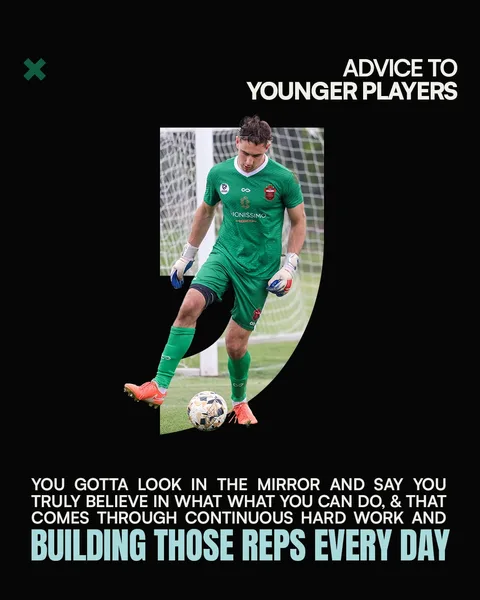
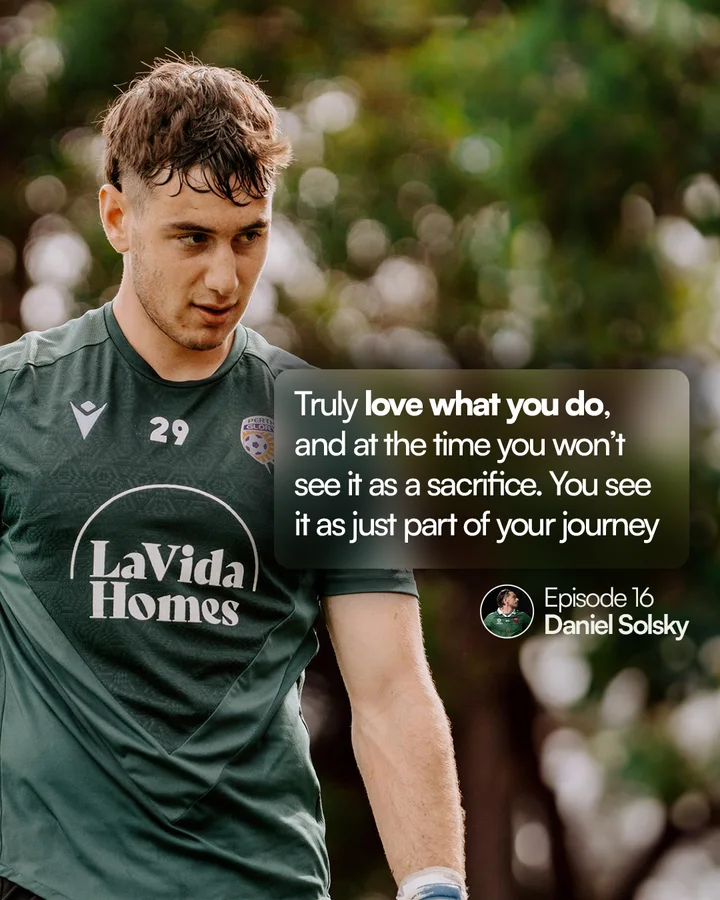
50:52 Daniel Solsky Yeah, well the fur I I run it I the the first twelve games of the twenty twenty five season I was actually on the bench for first grade. So I was doing all that travelling, not even playing. I was playing some twenties and this is my head was I won't go too much into that. My that was I was almost done football. I almost quit football midway through last year. Not many people know. but I ended up getting an opportunity in round thirteen and we beat Marconi three nil away and that was my first game coming in and like that was just it goes into the mo into the message of of of believing yourself because I think a lot of people would have thrown the toweling during that period and you you stick it out, you stick it out, you persevere and it ultimately then you can it rewards you if you if you're hanging there long enough. So that was it was crazy, like like the the the Wollongong. It was almost like a movie, like doing that amount of driving and and like the commitment and it w I c again I won't go into too much detail about even how it was, but Yeah, looking back on it, I almost think I don't know how I did it, the amount of commuting and stuff, but I I think when you're fueled by the love of the game and you're fueled by wanting to see how good you can get and you truly love what you do, y at the time you don't see it as a as a sacrifice. You see it as just part of your journey and something that you have to do. And I d I never really saw it as anything but that, to be honest.
52:12 Jan Yeah, very good. And then when did the phone call come?
52:15 Daniel Solsky Yeah, so the phone call came might have been after around like eighteen, nineteen. I actually finished a training at w at Wollongong and I opened my phone and it was a text from the Perth Glory goalkeeper coach just saying like, Hi Daniel, it's Ruben Parker here from Perth Glory, the goalkeeper coach. will you be around to have a chat about a percentual opportunity in the A League? and I was like, Holy shit, like like this is
52:40 Jan Yeah.
52:41 Daniel Solsky Is this actually real? Cause I was sorta hoping in this period that I was gonna get an A-leag. I knew was playing well in NPL and I was hoping that there might be an A-league opportunity, but weeks were going by and I and there was nothing coming and I just felt like it's probably not gonna happen this year for me. so that really caught me by surprise and Yeah, I I long story short, my parents were overseas at at that time in America, the World Cup and I pretty much just called them saying like this is what's going on and they were like, Holy shit and I I went on We organized literally the week after to go down to Perth for a they wanted to bring me in for a trial because they pretty much said, like, look, we really like you, but signing someone out of NPL to A League is without having a trial is just not real it's not realistic. and I always said to people, all I ever needed was a trial to show what I can do and I know that once I'm in that environment I I won't need a second chance. And I think I had a really good week of training and yeah, came back played a game for Wollongong 'cause so I yeah, played Expirit on the Saturday, flew out to Perth on the Sunday, flew back to Sydney on the Thursday or the Friday, played on the Saturday for Wollongong. And we actually drew three all that game. I copped copped a few goals and I was thinking, fuck, like I could be sorry for the language, but I was like, I could be
54:02 Jan Yeah.
54:04 Daniel Solsky I was like I was like now, I was I was gutted. I was like this is not a good way after my week of Perth to Cop three. But ended up getting a call that night from Griffo just saying like he actually messaged me before the game, just saying, Hey mate, let me know when you're free after your game to have a call and I was my head was
54:22 Jan no, and your head was probably thinking the whole game about the conversation, huh?
54:26 Daniel Solsky To be honest, it was a huge lesson for me. during the whole time from when he first messaged me, you're trying to keep your focus on Wollongong And balancing that was a really was really challenging. it was something that I it
54:39 Jan I imagine
54:39 Daniel Solsky was it was the first time ever. I was like, you're really having to try and block out what what could happen in the background and obviously you can't speak to anyone about it either and you're like trying to really just stay focused on the task, but then at the same time in the back of your head, every game and you're thinking, I wanna be per VT, I don't wanna make a mistake, they could be watching and that was crazy. So then to finish that game and we copped three and I was low key like my god, I was human.
55:05 Jan How am I gonna go into this whole conversation now? He's like,
55:08 Daniel Solsky Yeah, exactly, but
55:09 Jan Hey, hey Daniel, how how was the game? And you're like, let's
55:12 Daniel Solsky Yeah
55:12 Jan not talk about it.
55:13 Daniel Solsky Yeah, exactly. I was I was thinking, I hope he didn't watch, but he he was like the first thing is like, Yeah, watch your game and I was like, I didn't have a bad game to be honest. It was just one of those games you cop three goals and I was like, Yeah, look, it's just yeah, it was one of those games. He was like, Yeah, look, I agree. But he said ultimately I've we we've seen enough of you now and we're really impressed with how you came in and we want to offer you a deal and I remember those word I remember I was walking on my st I was too nervous to like sit in my room. I had too much energy and nervous energy and I was walking up and down the street and I just remember when he said those words to me and I I mean it was just sort of like a combination of probably from when I first went to Sydney FC for to NPL to start training with them in twenty twenty to to twenty twenty six. It was like that six year journey of a million ups and downs that we haven't even got it into that sort of just was like, there you go, like this is your first proper professional deal. And I remember just I was a bit spee I think I was a bit I I was even a bit speechless. Even now I still don't really have the words to
56:17 Jan Yeah.
56:17 Daniel Solsky phrase how I felt. But yeah, my parents were overseas and I I I called my grandparents and just said, like, can I come to your to your house? It was all four of my grandparents have been on this journey with me as much as anyone. And so I went but I went to my mum's parents and they op I opened the door and they've sorta known I I was gonna have a call with them and they've known the last month it's been progressing and They wanted to wait and see and I just told I got a contract and we literally I literally just broke down of in in happy in tears to be honest, when I was with them and it was a very unique moment. for a lot of people I think it just would have been a moment of like, that like finally my contract. But for me it was like I'd almost quit football fourteen months before that, fifteen months before that and They they'd seen firsthand the sacrifices made to Spain, Wollongong, the mornings at Sydney, the Nights at Manly and it was the amount of hours that I'd devoted and the amount of setbacks that I'd had. And I think getting to share that night with them and we we we just sat there on the couch and reminisced over the last five, six years. They'd come to Leon
57:20 Jan Yes.
57:20 Daniel Solsky and my in Spain and they'd visited me all along and they'd seen the journey and it was very unique. And then I remember my my old man, he messaged me that n he'd woken up at four AM in in America saying, I can't sleep. Have you got any messages from Griffo or anything? And and I actually called him. I just said, Can you call? And he was like, All right, I'll I'll I'll leave the hotel room and and I called him and and that was also one of the most special moments getting to share that with him. And that whole that whole night he was he couldn't go back to bed. I was getting messages every twenty minutes, just mate, I can't believe it I'm buzzing this I can't believe it. I can't believe it. I can't believe it. And then Getting to tell my mum and my sister and just getting to share that experience with with the people that had been in your close circle for so long and had believed in you and no one else had. was just one of the most unique and special journeys that you can and special moments you can that that that that I can ever have had. And I a moment I wish for everyone to get to experience 'cause it's just it was like a goosebumps moment and yeah, I'm very grateful to have had that.
58:22 Jan Yeah. Thanks for thanks for sharing that and thanks for sharing the the role of motion. I can even tell now that still gives you goosebumps inside you
58:28 Daniel Solsky Yeah.
58:30 Jan wow, yeah, and that's how it should be, right? Because it means so much because you know that you've worked
58:34 Daniel Solsky Yeah.
58:35 Jan so many years, so many training sessions, so much traveling, like you said, so many setbacks that happen for any player out there on the journey that for so many the the progression and the journey never goes in the straight line. There's always ups
58:47 Daniel Solsky Yeah.
58:48 Jan and downs, there's always setbacks, there's always challenges you have to overcome. But at some
58:51 Daniel Solsky Yeah.
58:52 Jan f hopefully for many that are listening and for a lot of players, it works out in the end, but it happens through yeah, a lot of yeah, overcoming adversity and challenges and obstacles. And well done to you, man, for yeah, for pushing through and not hanging up the gloves and not stopping and and still wanting to do
59:10 Daniel Solsky Okay.
59:10 Jan that. yeah, I think Honestly, great journey, and that's that's one reason why I wanted to have you on the podcast, because I feel like it shows a lot of players out there that there are so many different ways to get to this level. And it is also
59:20 Daniel Solsky For sure.
59:21 Jan possible, especially for players here in Australia, to get to that level through the NPL, through doing well in the
59:27 Daniel Solsky For sure.
59:27 Jan NPL as a young player. but as you highlighted over yeah, the episode is like it's so much more important how much you progress in each season, regardless of where you play. It doesn't have
59:37 Daniel Solsky Mm-hmm.
59:37 Jan to always be the best club, the best team, you know, playing up in age group. It doesn't have to be. It's about how consistent can you be over a very, very long time. ~
59:47 Daniel Solsky Yeah.
59:48 Jan until you potentially reach that level. So Solsky, thanks thanks a lot for sharing that raw emotion. I love it.
59:55 Daniel Solsky No, of course.
59:56 Jan now you're already giving me that that that that that insight of like what that professional contract or that moment felt like. Maybe to to wrap up the episode, You mentioned that there were a lot of challenges and setbacks during the time, but what would you say what were your your ways of always overcoming then and then ki continuing to just keep playing, keep training, even though every single time you probably could have been like okay, nah, that's it.
60:22 Daniel Solsky Honestly, that that that's where having your your circle of people for me becomes the most important thing because I without my parents, my grandparents, my closest friends always being in your corner. I'm not sure how I would have got through it all because they're a t I'm a very I like to think I'm a very intrinsically motivated person and I and and and I will just go go go but sometimes you are so you can get so knocked down and so beaten down that It's hard to pull yourself out of it and I'm very fortunate that I had my circle of people between my family, my friends, my girlfriend later on, in the in my journey, really be there for you when you needed them because without that I think there were times that I it would have been it would have been really difficult to keep going and even in Wollongong they were always they were coming down with me, my dad, my grandpa, they would come and do drives with me throughout the week to to help me drive to and from Wollongong and watch me train for an hour on a Friday, but they would do an hour and a half each way in the car just so I wouldn't have to do it alone and even if I was on the field for forty five minutes, like these are the type of things that like make me want to keep going as much for me but as for them and like I've said my success of my journey and please God I always say this is just the beginning of my journey now. But this just getting here has been it's it's a it's a success of many people, not just not just me. So having a close circle for me and having those people that you can can can lean on in in tough moments I think is is the biggest thing for me.
61:48 Jan And and this is a perfect example of how the the involvement of family and parents can have a positive impact, right? It was never through pressure, you have to do this, you have to be the best level. It's more for just like being there, being supportive around and picking someone up when they're their lowest rather than being on top of them when they're at their highest. So I think that's a yeah, hopefully a great guideline and advice for some parents listening how they can support their their children when on on this journey. Obviously last part
62:17 Daniel Solsky Sure.
62:17 Jan for for this story, your like you said, your journey with Perth in the A League is just getting started.
62:23 Daniel Solsky Yeah.
62:24 Jan we will hopefully see you on the pitch a lot in the next season. Hopefully the season will go well for you guys. My first little question that you can answer is like, did did Griffo remember you from your manly days?
62:35 Daniel Solsky So what's even actually crazy, I'll I'll throw this in here. I'm sure it's n I can say. So I was still looking, I was trying to put out soft feelers to A League clubs when I was throughout the s throughout maybe the four weeks before getting messages from Wollongong and I I was reaching out to coaches I have at Sydney and Newcastle Jets at Brisbane Roar, I had a contact. I like trying to really I made a CV highlight where I was trying to do whatever I can. And I sent a message to Griffo before I'd been reached out to from Perth, just pretty much saying, Hey Griff, Blast from the past, it's Daniel Solsky here. I'd love an opportunity if you guys are looking for a keeper to come in for a trial. Here's my C V highlight show. And and he left me on read. He like he didn't even respond to my message. I remember g I remember thinking so I I remember thinking like, so Perth's a definite no go. 'Cause
63:24 Jan Go.
63:25 Daniel Solsky I was I was I remember I was gutted. I I I so that was that was funny. So he definitely but when I ended up coming in he'd actually said to me, We we've we've been tracking you for a while, to be honest. so I he never he never referenced the message, but I think maybe even when I'd message him there then
63:42 Jan Ma maybe he changed his phone number when he signed over there because he got too many messages from former city players.
63:46 Daniel Solsky Yeah. Exactly. I wouldn't I wouldn't blame him. but I I think maybe he'd already been keeping an eye on me even during that message. But yeah, so he I he did remember me. It was a very funny first interaction five years later. but he yeah, Griff and the whole coaching staff at Perth have been unbelievable like with me and and how they set up. I think it's a we got a great setup here and I think it's yeah, he it's it's a great yeah, just Great great environment. That was funny.
64:14 Jan Yeah, lo love to hear that and obviously there's this next chapter coming for you, so we're gonna let that sit in this episode. We're gonna see how the next journey will will go for you. I will definitely follow that. and then maybe in a in a in a year's time at the end of the A league season, maybe we have another conversation and talk more about like, okay, how has it been to then jump into that professional level, how's it been to play maybe play in front of crowds, walk into
64:38 Daniel Solsky Yeah.
64:38 Jan stadiums and all of that. To bring the conversation to an end, I'm just gonna fire out a few stoppage time questions that you can like e answer nice and easy. whatever comes
64:47 Daniel Solsky Yeah.
64:48 Jan first to mind, just just fire it out. so I'm gonna start with the first one. What is the most unexpected place that football has ever taken you?
64:56 Daniel Solsky Leon, where I was in my first place in Spain. hands down. Yeah. No, the boy it was it was
64:59 Jan Okay. Okay, perfect. Just because it was so different to everything you'd ever experienced.
65:04 Daniel Solsky I reckon if you take him Bondi on one end of the spectrum and said find me the polar opposite, it's probably the in the top three places it could be. And and and
65:12 Jan Yeah.
65:13 Daniel Solsky I'm so and I'm so grateful for that because that that that's that's I really think helped me shape me into the person I am today. But it was very unexpected. I don't I reckon
65:21 Jan Yeah.
65:22 Daniel Solsky I was the first person from Sydney to ever go there. That was crazy.
65:25 Jan Maybe one day they're gonna put a little signature of you somewhere saying like, we have a partnership with Bondi in Australia now. if there's
65:29 Daniel Solsky Yeah, exactly. Exactly. Yeah.
65:35 Jan there's one moment in your career so far, if you could relive it football wise, which one would it be?
65:41 Daniel Solsky Oof. Relevant. like as a player you're saying? ~
65:44 Jan Yeah.
65:46 Daniel Solsky no, it's gotta be when We we won the under 16 NPL. We we beat we we needed a point against Mount Druitt and we had him in a midweek game. It was a catch-up, played on a Wednesday night. I remember that whole day of school, because we were all at 10 of us were at school together. And the whole day of school we're just getting ready for the bit like it for us it was it was our grand final life. And we and we drew nil all and we held out for a dodgy nil all draw, time wasting from minute two and Mount Druitt, and that we sung the team song on their field to win NPL one. Against all the big teams. We went out for for for pizzas that night with the whole team and it was like a full four or five year journey from under thirteens. We kept eighty percent of the group together, and that night was like the best football night of my life. I don't know, for sure. Honestly. It was special.
66:34 Jan Love it. Love it. Hopefully there will be a few more editions coming over the next years, but I think that's a very unique one because the youth ones,
66:40 Daniel Solsky No. It's it was
66:43 Jan the first title is always the the biggest one.
66:45 Daniel Solsky Yeah, it was just unique as well, being in the same group of boys that you'd had for literally for some of them since age five. And it was it was that was that was a special team. So it w it's a it's a different moment to really live, but it was like the culmination of su of of a whole youth journey ending. So that was cool. That was cool.
67:03 Jan Yeah. Love that. The the best player you ever played against.
67:08 Daniel Solsky Did I have to be on the field or could I have been on the bench? Cause
67:10 Jan Nah, let's say on the field, but if you you can give it the one on the bench after. Or start with the one off the bench if you still need to think about it.
67:14 Daniel Solsky the one on the bench is Antw is is Antoine Griezmann because we played we had a Copa del Rey game for Marbella round of 32. We got drawn athletico. that was wah unbelievable. But Griezmann was he played for them. the best player I've See, played against. I've trained with Noni Madueke one on one. but that's not a match. I'm gonna have to I'm let me come back to that because I I I I'm my journey hasn't allowed me to have played against that many crazy plays. It's a bit boring, but
67:46 Jan Okay, then we go then we go first, best player you've played with.
67:50 Daniel Solsky Yeah, that that's cojon for sure. Like at it joke. I've ne automatic, like his finishing was aut I've never seen anything like it. ~
67:58 Jan Okay. so far you've played in a lot of different teams. you've played now obviously different cities, different nations. excluding Perth because you've just joined there. Which one had the best changing culture changing room culture so far?
68:13 Daniel Solsky I I'm so blessed to say I've been in unbelievable change rooms everywhere I've gone. Like from Spain to Wollongong to to Perth to Hakoah. But you it it's the same cliche. That Hakoah sixteen's team was that's how we won the league. We were nowhere near the most talented group of footballers going against Wonder C F C Central Coast City United. We were a bunch of boys who who were just Jewish boys from Moriah College, but we were we were like a as cliche, we were a brotherhood and like that is literally how we got through that league is that we we did we die for each other on the field. that was it was special. I I I'm it was I can't I know
68:47 Jan Okay. We take it, we take it.
68:49 Daniel Solsky I I I know it's boring to keep going back, but it's just that it's just the truth. It's it's it's the truth.
68:54 Jan No, I love when when people like to reminisce, it's perfect. That's what this podcast is about as well. last one, this is more now a goalkeeper specific question. so what is your way of throwing off a player that's gonna take a penalty on you?
69:05 Daniel Solsky I love I I love just delaying. Like that that's my thing. I delay like from the penalty being taken, I want it to be at least sorry, from the wi penalty being blown, I want at least ninety seconds to two minutes before he's taken it. So I I I always I I I I sometimes take a glove off to try and just put the glove back on to delay time. I'll always go and take my water bottle, walk far from the goal, have some water, complain to the ref that the ball's not on the spot. Just trying to make it like as long as possible because I just think it just adds the pressure to them. They they just want to take the pen and get it done with. and then and then I yeah, so that no, that's the answer. I just and to be fair, for wolves
69:44 Jan Yeah, perfect.
69:45 Daniel Solsky this year, I went I went three from five saves. So five penalties, three saves. So it worked. It worked this season.
69:52 Jan So there's a specific advice for young goalkeepers or goalkeepers in general out there what they can do to maybe increase their chances
69:59 Daniel Solsky Exactly.
70:00 Jan of saving a goalkeeper. Perfect. That's the first advice. Now for any player out there on their journey to from first touch to first team, what would your be what would your best piece of advice be?
70:11 Daniel Solsky Honestly, just believing in yourself because we're in an industry where you're gonna have so many more doubters and haters than people that love you and if you're gonna listen to people every time who don't believe in you or doubt you it's gonna be a very quick career, And that that that for me has been the the thing that's kept me going is you gotta really believe in what you can do and look in the mirror and say, like I I truly believe in what this in what you can do and that comes through continuously hard work and and building those reps every day and build through building the reps and being consistent you really find that b intrinsic belief. so just don't listen not not listening to when people don't believe in you because I if I did that, I don't think I would have made it past under thirteen. So just really back what you can do and and and and believe in yourself the whole way.
71:01 Jan Yeah, perfect. Thanks for sharing that and I hope yeah, players will will take that part on. Solsky, very great episode, very great to hear your journey. I think it's a it's a
71:09 Daniel Solsky Yeah. How does it mean?
71:10 Jan big, big message for a lot of players out there that that maybe think, I have a challenge in front of me, I have to overcome this. This might only be the first one. There's been players like yourself that had to overcome a lot of challenges to get to where they are now. So believe in the process, believe in the journey, keep controlling what you can control and that's working every single day to become a tiny bit better. to then ultimately reach the best level you can be when you're twenty two, twenty three, twenty four, because that's when it counts the most. I encourage
71:37 Daniel Solsky Exactly.
71:37 Jan everyone to follow your journey now as well and support you guys, especially when Perth is coming to Sydney to to maybe see if there's a penalty and you're gonna delay the the penalty we're taking.
71:46 Daniel Solsky Exactly. Now now the the attack is the it's the referee's gonna be on to me when they when they when there's a pair of Solsky on the line.
71:51 Jan Yeah. Let's see if they if they even listen to this. Solsky I wish you good luck for the start of the season, enjoy the preseason
71:58 Daniel Solsky Nice. Thank you.
71:59 Jan and I'm sure I will come to watch again when you guys are in town.
72:03 Daniel Solsky Thank you for having me on. just quickly I'd say the best player to ever play against. Although it wasn't when he was at the level where he is now, but he's ended up being there. It's probably Cristian Volpato, who's obviously now a Socceroo and killing it at the World Cup. We played against him growing up. and so yeah, he's he's ended up being the best. bit of a boring arm.
72:21 Jan And here's another story of not staying in Australia, going somewhere else to really Yeah. Perfect, great addition.
72:25 Daniel Solsky Yeah, yeah, exactly. Thank you for having me on. yeah, buzzing for for what's to come.